Choosing the right cabinet color is one of the most important design decisions in a kitchen remodel because cabinetry covers a large portion of the room and influences how countertops, flooring, backsplash, hardware, and lighting look together. At VCT Kitchen And Bath, our kitchen cabinet installation service helps homeowners in Maryland compare cabinet styles, finishes, layouts, and colors before installation begins.
Current kitchen cabinet colors are becoming warmer, more natural, and more personalized. White is still relevant, but homeowners now have more options, including natural wood, warm off-white, sage green, taupe, blue, charcoal, and deeper earthy shades. The right choice depends on more than what is trending; it should also work with your kitchen size, lighting, materials, and long-term remodeling goals.
What Kitchen Cabinet Colors Are Trending Now?
The biggest change in kitchen cabinet color trends is the move away from kitchens that rely entirely on cool gray or bright white. Warmer finishes are becoming more important, especially natural wood, cream, off-white, earthy green, mushroom, taupe, and deeper brown tones.
This shift works especially well for the types of kitchens many Maryland homeowners want today: comfortable, functional spaces that feel updated without becoming overly trendy. Cabinet colors are also being coordinated more carefully with countertops, flooring, backsplash materials, and lighting instead of being selected as a separate design decision.
At VCT Kitchen And Bath, cabinet planning is part of the overall design process. Our 3D design approach allows homeowners to review the proposed kitchen layout and finish direction before installation, which is especially helpful when comparing light and dark cabinet options or considering two-tone cabinetry.
Popular Kitchen Cabinet Colors for 2026
Kitchen cabinet colors in 2026 are moving toward warmer, more natural, and more personalized finishes. Warm white, sage green, taupe, muted blue, deep brown, and charcoal are popular choices for creating a welcoming and stylish kitchen.
Natural Wood Cabinets
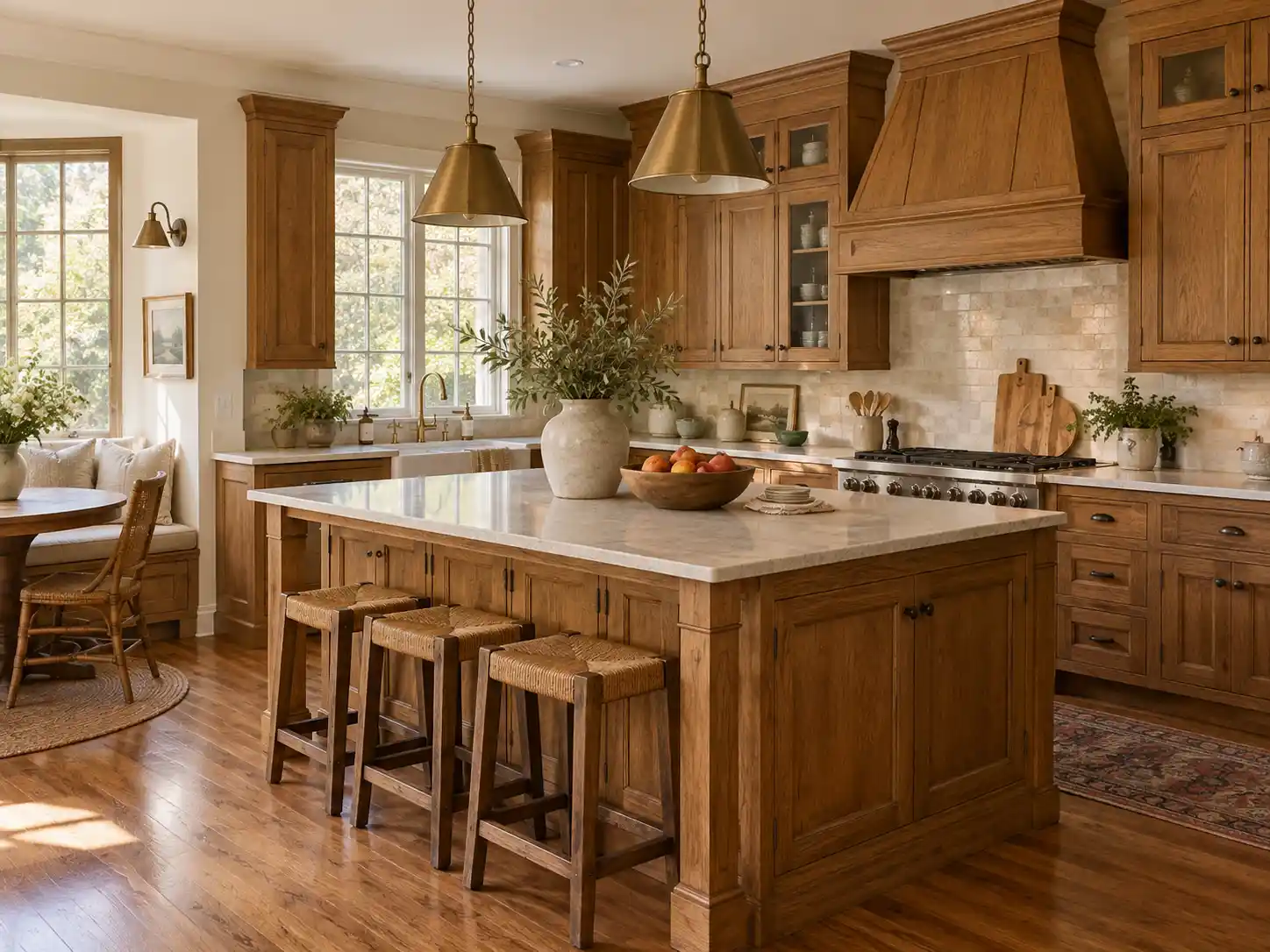
Natural wood is one of the strongest directions in current kitchen design because it adds warmth without requiring a bold painted color.
Light and medium wood tones can make a kitchen feel relaxed and welcoming, while deeper wood finishes can create a richer, more traditional appearance. The final result depends on the cabinet door style, wood tone, countertop, hardware, flooring, and lighting used around it.
Natural wood can work especially well when homeowners want cabinetry that fits between traditional and modern design. A simple cabinet profile with a clean wood finish can feel contemporary, while a more detailed door style can create a traditional appearance.
Wood also gives homeowners flexibility when coordinating the rest of the remodel. Light countertops can create contrast, while stone-look surfaces and warm flooring can produce a more layered, natural palette.
Warm White and Off-White Cabinets
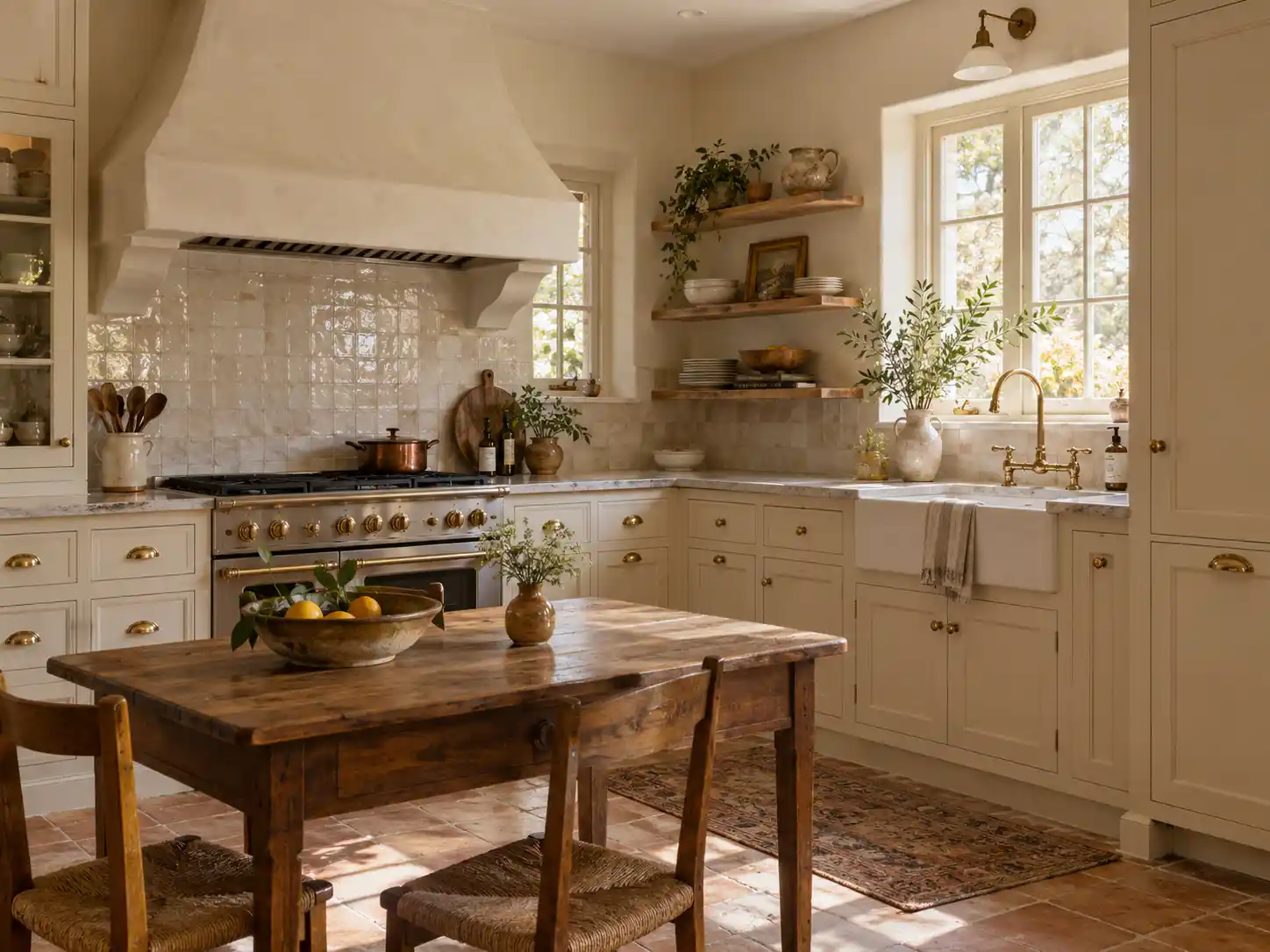
White cabinets are not disappearing. Instead, homeowners are moving toward softer versions of white. Warm white, cream, ivory, and off-white cabinetry can keep a kitchen feeling bright while avoiding the colder appearance that sometimes comes with very stark white finishes. These colors are particularly useful for homeowners who want a kitchen that will remain easy to update over time.
Warm white cabinetry can work with many countertop styles, flooring materials, backsplash designs, and hardware finishes. It is also a practical option when the kitchen has limited natural light because a lighter cabinet finish can help the room feel more open.
For homeowners who like a classic kitchen but still want an updated look, warm white cabinets can be combined with a wood island, darker hardware, or a more distinctive countertop to create contrast without making the overall design too busy.
Sage and Olive Green Cabinets
Green has become one of the most popular alternatives to traditional neutral cabinetry. Sage green offers a softer approach and can work well in kitchens where homeowners want some color without making the cabinets overpower the room. Olive and deeper earthy greens create a stronger appearance while still feeling connected to natural materials.
Green cabinetry can coordinate especially well with wood flooring, warm white countertops, stone textures, and neutral backsplashes. It can also be used selectively.
Instead of installing green cabinetry throughout the kitchen, homeowners may choose green for an island while keeping perimeter cabinets warm white or wood-toned. This allows the color to become a focal point without controlling the entire room.
Greige, Mushroom, and Taupe Cabinets
For homeowners who want something warmer than gray but quieter than green or blue, greige, mushroom, and taupe are strong kitchen cabinet color ideas.
These shades work well because they provide subtle color while still acting like neutrals. They can connect several materials in the kitchen, especially when the space includes warm flooring, veined countertops, metal hardware, and natural textures.
Taupe and mushroom cabinetry can also be a good choice for transitional kitchens. They provide more depth than white while remaining understated enough to work with both traditional and contemporary design elements.
The exact undertone matters. A cabinet that appears beige in one room can look gray or slightly brown in another depending on natural light, wall paint, flooring, and countertop colors. This is why samples should be compared in the actual kitchen whenever possible.
Navy and Muted Blue Cabinets
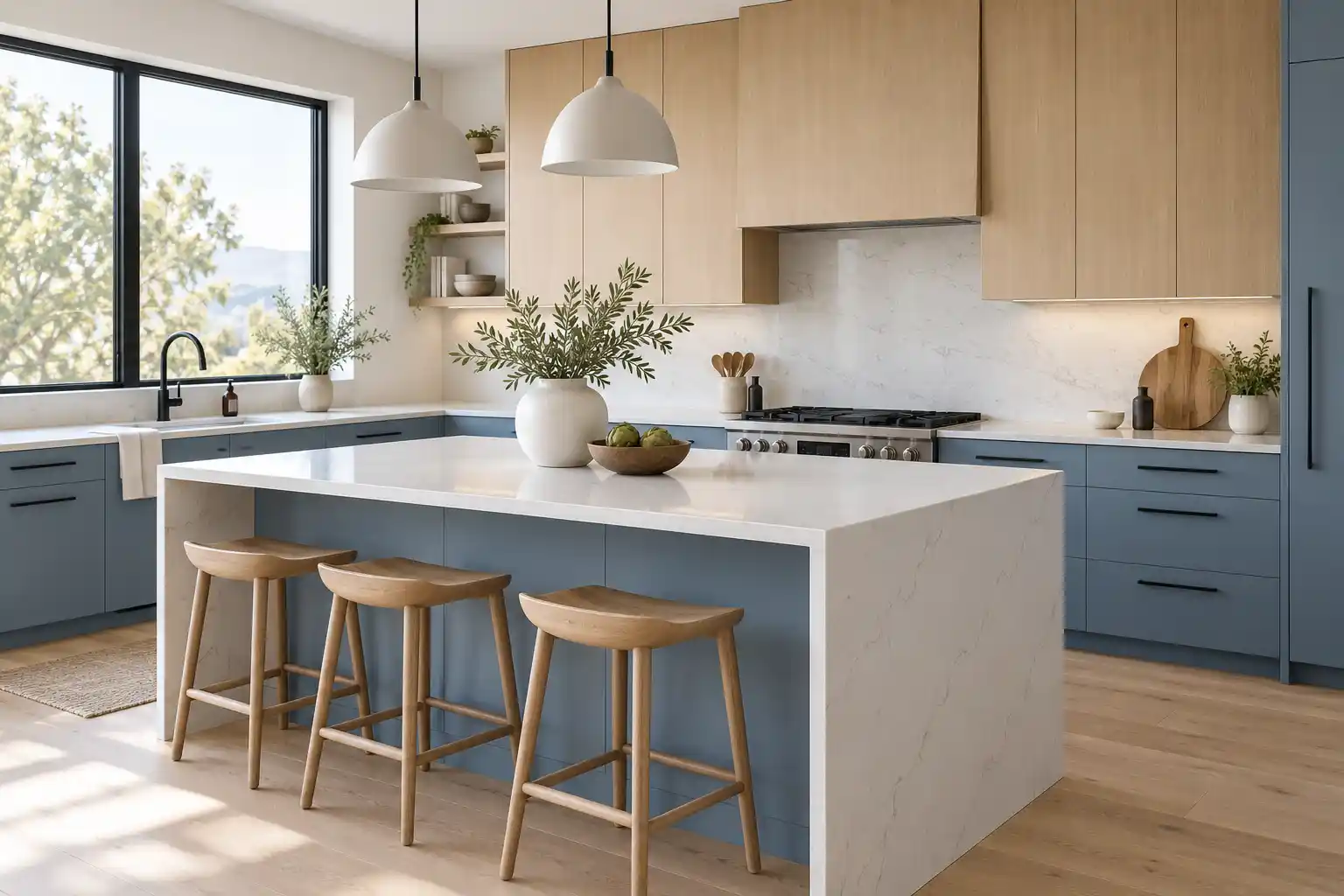
Blue remains a useful choice for homeowners who want cabinetry with more personality. Deep navy can create a strong focal point, especially on a kitchen island or lower cabinet run. Softer, muted blues provide a lighter alternative and can work particularly well when paired with white, cream, light wood, or subtle stone finishes.
For larger kitchens, darker blue cabinets can add visual weight and definition. In smaller kitchens, using dark blue selectively may be more effective than applying it throughout the room.
Blue cabinets also work across several design styles. A detailed cabinet door in a deep blue can feel more traditional, while a cleaner cabinet profile in charcoal blue can create a more modern appearance.
Deep Brown and Rich Earthy Cabinets
Brown cabinetry is returning in a warmer and more refined way. Instead of older reddish or overly glossy finishes, current designs are leaning toward chocolate brown, walnut-inspired shades, warm espresso, and other deeper natural tones. These colors can bring depth to a kitchen while feeling softer than pure black.
Dark brown cabinetry tends to work best when the other materials provide enough contrast. A lighter countertop, well-planned lighting, and a backsplash that does not compete with the cabinets can keep the room balanced.
This option can be especially effective in larger kitchens where homeowners want cabinetry to feel substantial without relying on bright or highly saturated colors.
Black and Charcoal Cabinets
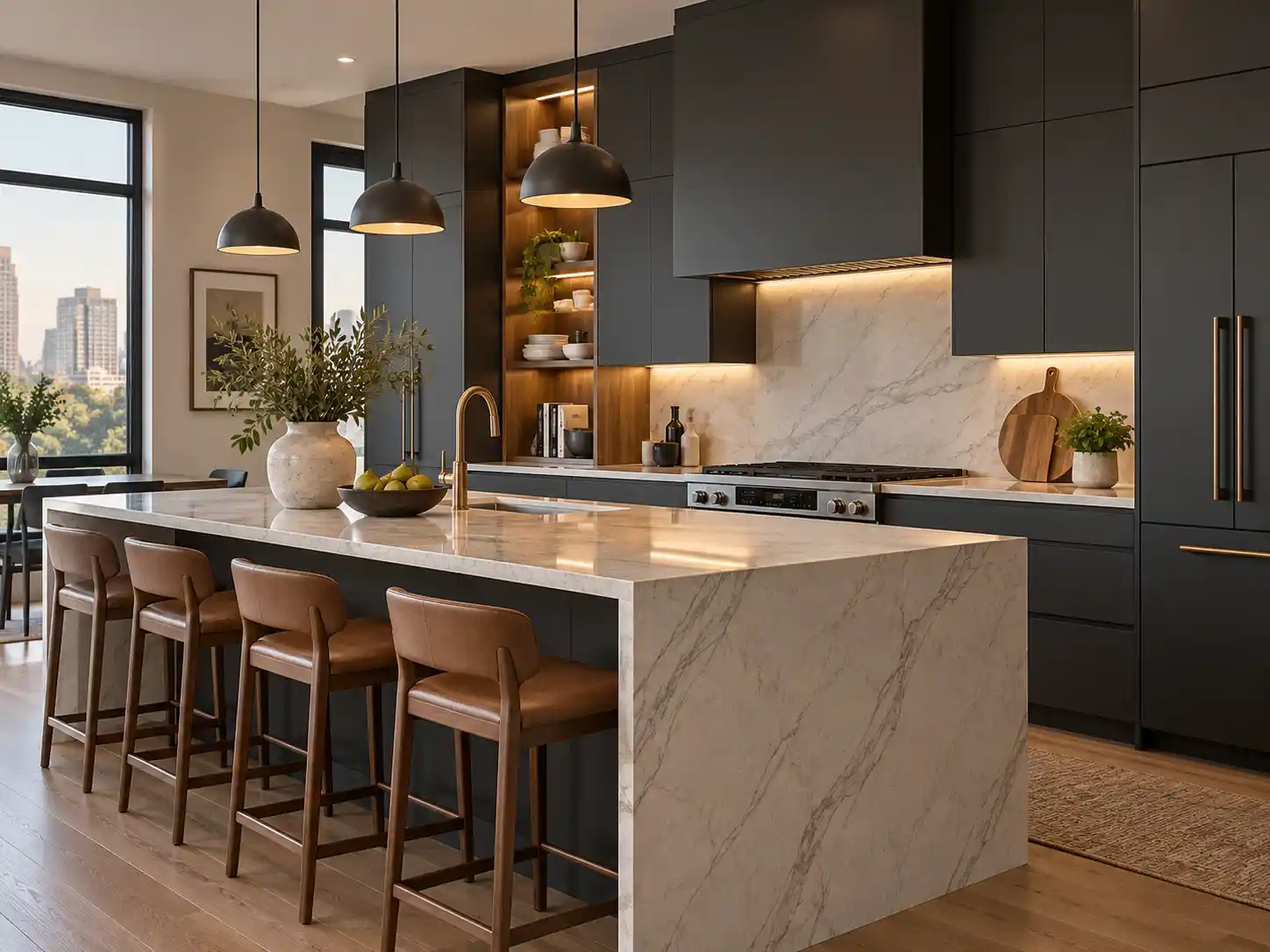
Black and charcoal remain popular choices for homeowners planning a clean, modern kitchen. These shades work particularly well with simple cabinet profiles, light countertops, natural wood details, and carefully planned lighting. They can make cabinetry feel architectural and create strong contrast within an open kitchen.
However, dark cabinets require more planning than lighter colors. A kitchen with limited natural light can feel smaller if every cabinet is black or charcoal. In these situations, VCT Kitchen And Bath may help homeowners compare alternatives such as a dark island with lighter perimeter cabinets or darker lower cabinets with brighter upper cabinetry. The goal should be to create contrast without making the room unnecessarily heavy.
Are Two-Tone Kitchen Cabinets Still Popular?
Yes. Two-tone cabinetry continues to work well because it gives homeowners a way to use more than one finish without making the kitchen feel overly colorful.
Some practical combinations include warm white perimeter cabinets with a natural wood island, sage green with cream, taupe with wood, or light cabinetry with a charcoal island. The important part is making sure both cabinet finishes also work with the countertop, flooring, backsplash, and hardware.
Two-tone cabinetry can be particularly useful when the island is meant to become a focal point. It can also visually separate different parts of a large kitchen while maintaining one coordinated design. In a compact space, these color contrasts should be planned more carefully alongside other small kitchen remodeling ideas for layout, storage, lighting, and finishes.
How to Choose the Best Kitchen Cabinet Color
The best kitchen cabinet colors are not simply the shades receiving the most attention this year. The right choice needs to work inside your actual kitchen.
1. Start With the Amount of Light in the Room
Natural light can completely change the way a cabinet color appears. A dark green that looks balanced in a bright showroom may feel much heavier in a kitchen with small windows. Warm white can look brighter during the day and creamier under evening lighting. Taupe may appear warmer or cooler depending on surrounding materials.
For this reason, homeowners should review cabinet samples in the room rather than choosing from online images alone.
2. Coordinate Cabinets With the Countertop
Cabinets and countertops are directly connected visually, so these two materials should be selected together whenever possible. A dramatic countertop may work best with quieter cabinetry. A simple countertop can give homeowners more flexibility to introduce color through the cabinets.
Undertones also matter. Warm cabinetry paired with a very cool countertop can create an unwanted contrast, while finishes with compatible undertones usually produce a more coordinated result.
3. Look at the Flooring and Backsplash
Existing flooring may influence which cabinet colors make sense, especially when homeowners are keeping the floor during the remodel.
Warm wood flooring often pairs naturally with cream, sage, taupe, muted green, and selected wood cabinetry. Cooler flooring may require a different cabinet undertone.
The backsplash should normally support the cabinetry and countertop rather than compete with both. When every surface has a strong pattern or color, the kitchen can quickly become visually crowded.
4. Match the Color to Your Kitchen Style
Cabinet color and cabinet style should work together. Homeowners comparing traditional vs modern kitchen design will also notice that each style supports a different range of cabinet colors, door profiles, hardware, and surrounding finishes.
Traditional kitchens often suit warm white, cream, natural wood, muted green, or other softer tones. Modern kitchens can support natural wood, white, charcoal, black, muted blue, and stronger two-tone combinations.
Transitional kitchens give homeowners even more flexibility because they combine classic cabinet forms with cleaner finishes and updated materials.
5. Consider the Size of the Kitchen
Light cabinetry can help a smaller kitchen feel brighter, but white is not the only option. Light wood, warm cream, pale greige, mushroom, and soft sage can also provide an open appearance while adding more character.
Large kitchens can usually support deeper tones more easily because there is more room to balance dark cabinetry with countertops, lighting, flooring, and open areas. A dark color can still work in a compact kitchen, but it may be better used on lower cabinets or a selected feature rather than every cabinet.
Should You Choose a Trendy or Timeless Cabinet Color?
Cabinets are a major part of a kitchen remodel, so choosing a color only because it is currently popular can be risky. Trends are useful because they introduce homeowners to new possibilities. Natural wood, warmer whites, muted greens, taupe, charcoal blue, and earthy finishes can all provide inspiration. However, the final cabinet color should still fit the home and the homeowner’s preferences.
A useful approach is to decide which parts of the kitchen should remain relatively timeless and where you are comfortable adding more personality.
For example, homeowners who prefer flexibility may choose warm white or wood cabinetry and introduce stronger colors through the island, backsplash, lighting, stools, or wall paint. Homeowners who genuinely love green or blue may prefer to make the cabinetry itself the main color feature. There is no need to make every kitchen look the same simply because a particular color is trending.
Why Cabinet Color Should Be Planned With the Full Kitchen
Choosing the cabinet color before considering everything else can lead to difficult design decisions later. Cabinetry affects the countertop dimensions, appliance placement, storage capacity, workflow, island design, backsplash areas, and overall visual balance of the room. That is why VCT Kitchen And Bath approaches cabinetry as part of the complete kitchen rather than treating it as a separate decorative feature.
Through our kitchen remodeling services, homeowners can plan cabinetry, countertops, flooring, backsplash, lighting, appliances, plumbing, electrical work, and layout changes through one coordinated remodeling process.
Our design process begins by understanding the existing space, storage needs, daily routines, and remodeling goals. A custom design and 3D visualization can then help homeowners see how cabinet colors and other materials will work together before the project moves into installation. This is especially useful when choosing between two similar cabinet finishes or comparing a single-color kitchen with a two-tone design.
Popular Cabinet Colors Should Still Fit the Way You Live
A cabinet color can look beautiful in a photograph and still be wrong for a particular household. Homeowners with young families may prioritize finishes that are easier to maintain. Someone who cooks frequently may prefer a color that does not show every small mark. A homeowner planning to stay in the house long term may feel comfortable choosing a more personal shade, while someone looking for maximum design flexibility may prefer a warmer neutral.
Storage and layout also matter more than color alone. VCT Kitchen And Bath helps homeowners plan cabinet layouts around how the kitchen will actually be used, including drawer placement, pantry storage, work zones, appliance clearances, and accessible storage. Once the functional plan is right, the cabinet color can support the design instead of distracting from poor organization.
Plan Your Kitchen Cabinets With VCT Kitchen And Bath
The most popular kitchen cabinet colors right now include natural wood, warm white, cream, sage, olive, taupe, mushroom, blue, brown, black, and charcoal. Two-tone combinations are also giving homeowners more ways to personalize their kitchens without committing every cabinet to the same finish.
But the best cabinet color for your remodel is the one that works with your kitchen’s lighting, layout, countertop, flooring, backsplash, style, and everyday use.
VCT Kitchen And Bath helps homeowners in Maryland communities plan cabinet installation and complete kitchen remodeling with professional design, material coordination, 3D visualization, and installation. If you are ready to update your kitchen cabinets, schedule a free in-home estimate and explore cabinet colors and layouts that make sense for your home.
Frequently Asked Questions
What are the most popular kitchen cabinet colors right now?
Natural wood, warm white, off-white, sage green, olive, taupe, mushroom, muted blue, deep brown, charcoal, and black are among the strongest current cabinet color directions. Warmer and more natural-looking finishes are becoming especially important in modern kitchen design.
Are white kitchen cabinets still popular?
Yes. White cabinets are still popular, but many homeowners are choosing warmer whites, cream, and off-white instead of extremely bright or cool white finishes. These softer colors can create a bright kitchen while working more naturally with wood, stone, and warm flooring.
What kitchen cabinet colors work best in a small kitchen?
Warm white, cream, light wood, pale greige, mushroom, and soft sage can help a smaller kitchen feel bright and open. Dark colors can also work when used selectively on lower cabinets, an island, or another defined area.
What cabinet colors work well with a modern kitchen?
Popular modern kitchen cabinet colors include natural wood, warm white, charcoal, black, muted blue, taupe, and combinations of wood with painted cabinetry. The cabinet door style, hardware, countertop, and lighting also influence whether the finished kitchen feels modern.
How do I choose between light and dark kitchen cabinets?
Consider the room size, natural light, flooring, countertop, maintenance preferences, and overall kitchen style. Light cabinets generally make a room feel brighter, while dark cabinetry can create depth and contrast. VCT Kitchen And Bath can also use the design and planning stage to help compare finishes before installation.