White kitchen cabinets are often a good fit for kitchens that need a brighter, more open appearance. Dark cabinets create stronger contrast and bring depth to the room. Your kitchen’s lighting, existing finishes, and daily cleaning habits will help determine which option works better.
When planning new cabinetry, compare color alongside door style and layout. VCT Kitchen And Bath kitchen cabinet installation services help Maryland homeowners review these choices together, including how the selected finish coordinates with countertops, flooring, and appliances.
A compact kitchen with limited daylight may benefit from warm white cabinetry. A kitchen with large windows and lighter surrounding surfaces may suit charcoal, navy, or dark stained wood. Two-tone cabinetry offers another option when you want a lighter perimeter and a darker focal point.
White vs Dark Kitchen Cabinets at a Glance
Dark cabinetry includes black, charcoal, navy, deep green, espresso, and dark stained wood. Light finishes include white, cream, pale gray, and light wood. Each brings a different combination of color, grain, and contrast.
| Consideration | White kitchen cabinets | Dark kitchen cabinets |
| Brightness | Help available light create a brighter appearance | Work well with planned lighting and balanced surrounding finishes |
| Visual effect | Reduce the visual weight of extensive cabinetry | Define cabinet runs and create stronger focal points |
| Visible mess | Colored splashes and grime may stand out | Pale dust, water residue, and oily marks may stand out |
| Visible damage | Chips can expose darker material beneath the finish | Chips can expose lighter material beneath the finish |
| Material coordination | Require careful comparison of white and neutral undertones | Require attention to dark hues, wood tones, and surrounding contrast |
| Price factors | Cabinet line, door material, finish options, accessories, and installation | The same factors, including any charges for selected stains or paints |
| Suitable priorities | Brightness, visual openness, and a quieter backdrop | Depth, contrast, and more prominent cabinetry |
How Cabinet Color Changes Your Kitchen’s Brightness and Feel
Look at how much cabinetry is visible from the kitchen entrance and adjoining rooms. A dark island beneath an open ceiling creates a different effect from dark upper cabinets lining both sides of a narrow kitchen.
When White Cabinets Help a Kitchen Feel More Open
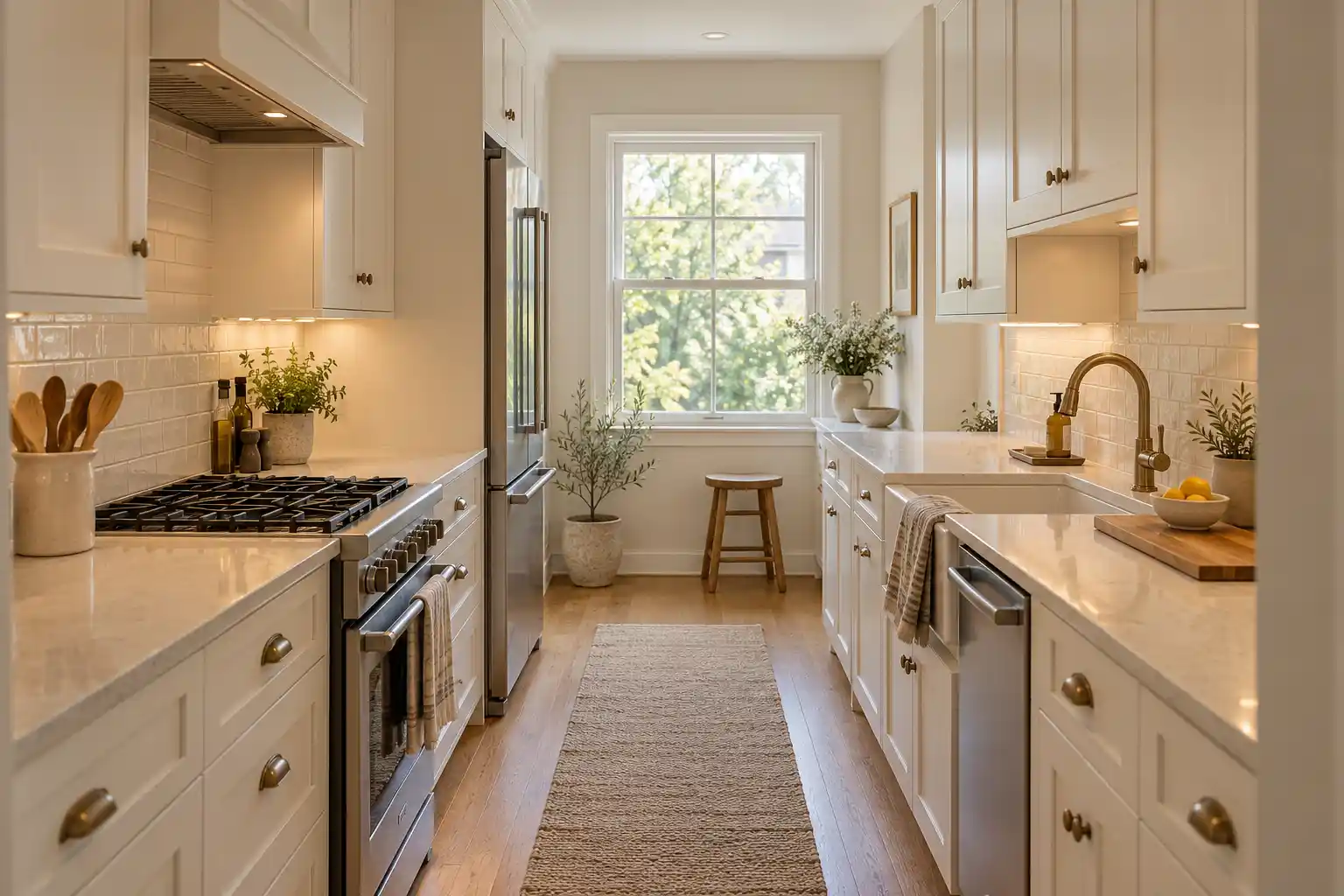
White and off-white cabinet fronts can make extensive cabinetry feel less dominant. This is useful in enclosed kitchens, particularly where upper cabinets cover much of the wall area.
In a galley kitchen, light cabinetry paired with a lighter backsplash can soften the appearance of the cabinet runs on either side. Keeping the contrast between cabinets and walls gentle can also give the room a more continuous appearance.
Lighting still needs attention. Under-cabinet fixtures illuminate preparation surfaces, while ceiling fixtures provide general light. Check how your chosen white looks under both daylight and evening lighting.
For kitchens with crowded work areas or limited storage, these small kitchen remodeling ideas explain layout and storage improvements that can make the space easier to use.
When Dark Cabinets Work in Small and Large Kitchens
The placement of dark cabinetry affects how much visual weight it adds. Dark base cabinets beneath a light countertop leave the upper walls relatively open. Dark tall cabinets across an entire wall create a much stronger presence.
A compact kitchen with a large window and few upper cabinets may accommodate deep colors comfortably. In a more enclosed room, using the darker finish on lower cabinets or a selected feature gives you more control over the effect.
Consider these arrangements:
- Enclosed galley kitchen: Light upper cabinets and backsplash with dark lower cabinets.
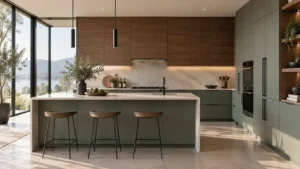
- Open kitchen with substantial daylight: Dark perimeter cabinets balanced by lighter walls and flooring.
- Kitchen with extensive tall storage: A lighter finish on the largest cabinet run, with dark cabinetry concentrated elsewhere.
Review these combinations after sunset. A design that feels balanced in afternoon daylight may need additional lighting for evening use.
Which Cabinets Show More Dirt, Fingerprints, and Wear?
Think about the marks you clean most often. Cooking splashes, dust, and fingerprints show differently on each finish, particularly around handles, beside the range, and below the sink.
What Tends to Stand Out on White Cabinets
Coffee, tomato sauce, grease buildup, and dirty marks around handles can be noticeable against white cabinet fronts. Doors near waste storage and the cooking area may need more frequent wiping.
The condition of the surface also affects cleaning. Residue can collect along recessed edges or damaged areas, making those spots harder to maintain.
Chips may reveal darker wood or another material beneath the white finish. Ask about touch-up products and inspect how the manufacturer’s finish covers door edges and corners.
What Tends to Stand Out on Dark Cabinets
Pale dust and dried water residue can stand out against dark doors. Oily fingerprints may become more visible when sunlight or a fixture shines across the surface.
A dark stained wood door may disguise some minor marks through its grain and color variation. A smooth, uniformly painted charcoal door can make the same marks easier to see.
Scratches also depend on the underlying material. A chip that exposes pale wood beneath dark paint can create a noticeable spot, especially around frequently used drawers and handles.
Why Finish and Door Profile Matter as Much as Color
Flat-panel doors have fewer recesses to clean. Shaker doors have an inner edge where residue can collect, while detailed raised-panel doors require more attention around their profiles.
Glossy finishes may reveal fingerprints and reflections. Some matte finishes show oils or develop visible patches after repeated rubbing. Check the specific coating’s care requirements and examine a finished sample under angled light.
Use the manufacturer’s recommended cleaning method. Wipe spills promptly, avoid abrasive tools, and dry moisture around sinks and dishwasher areas rather than letting it remain on the cabinet surface.
How to Match White or Dark Cabinets With Your Existing Finishes
Start with the flooring, countertops, and backsplash you plan to keep. Place cabinet samples directly beside those materials to see which combinations work and where undertones clash.
White Cabinets: Check Undertones Before Choosing
White finishes can appear creamy, gray, yellow, or cool. These differences become easier to see when the cabinet door sits beside another white surface.
A crisp white cabinet may make a cream countertop look more yellow. A warm white cabinet can look noticeably creamy beside bright white tile. Compare these combinations before choosing the finish.
Include wall paint and flooring in the review. If the cabinet sample looks too stark or yellow beside the existing materials, try a different white rather than assuming every surrounding surface needs replacement.
Dark Cabinets: Balance Contrast and Competing Wood Tones
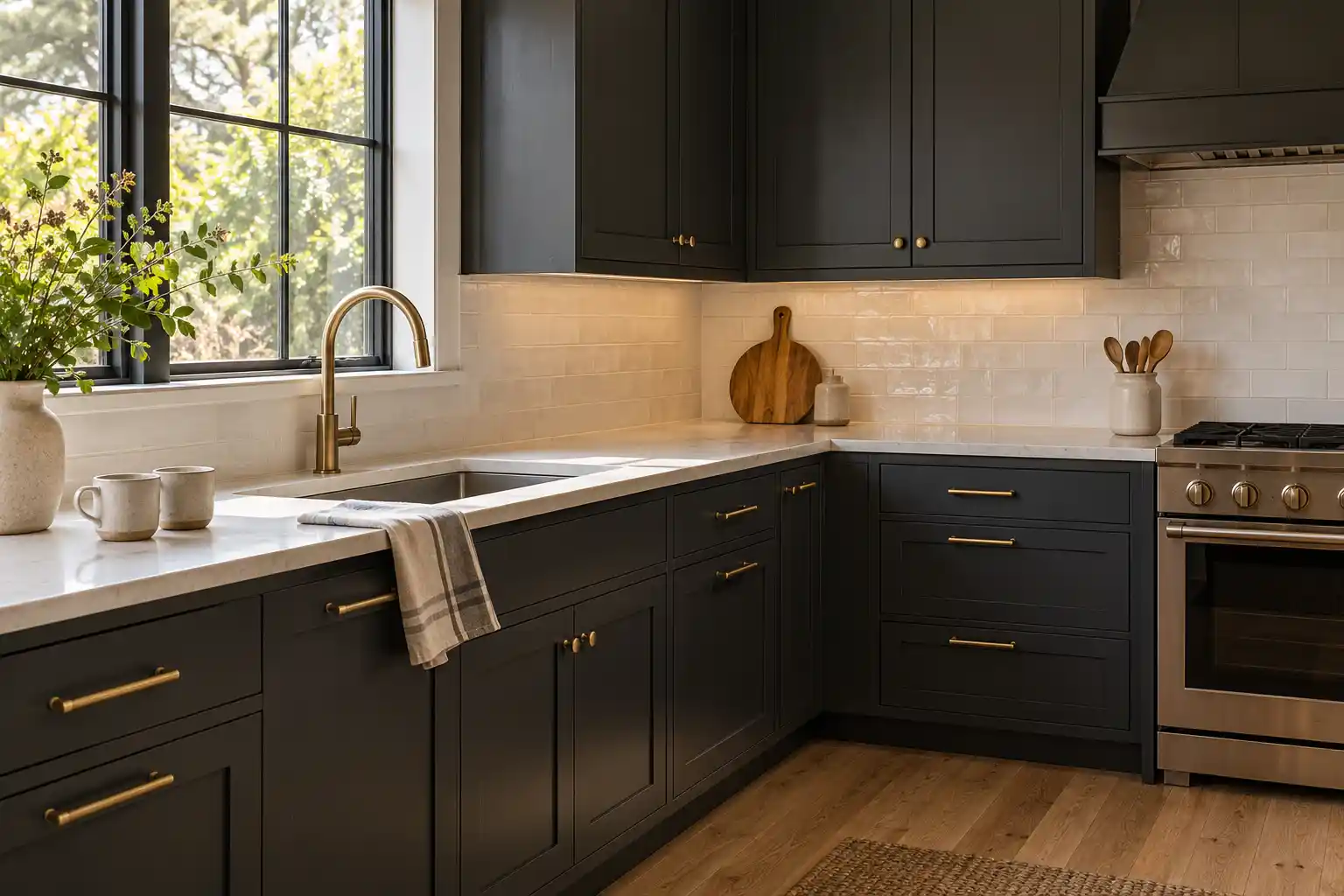
Light countertops create a distinct boundary above dark cabinetry. Dark countertops produce a more continuous appearance and may benefit from lighter walls, backsplash materials, or flooring.
For stained cabinets, compare wood undertones carefully. An espresso finish may reveal red or brown tones beside your floor, even if it looked neutral in the showroom.
Hardware changes the appearance too. Brass, brushed nickel, and other lighter metals stand out against dark doors. Dark hardware creates a quieter combination but should remain comfortable to locate and use.
Possible combinations include:
- Warm white cabinets with wood flooring: A softly patterned countertop keeps the palette restrained while the floor adds warmth.
- Charcoal cabinets with light countertops: A simple backsplash allows the cabinet contrast to remain the main feature.
- Dark stained cabinets with lighter walls: Compatible flooring undertones connect the wood surfaces without requiring an exact match.
If you are replacing the countertops, review cabinet selections during countertop installation planning. Sink placement, cabinet dimensions, and countertop edges need to coordinate with the visual choices.
Which Choice Has Better Long-Term Appeal?
Choose a finish that works with the materials you expect to keep longest. Flooring, countertops, and the cabinet door profile will continue to influence the kitchen’s appearance after accessories or wall colors change.
White cabinetry offers a lighter backdrop, but selecting the right undertone is important. A white that clashes with the countertop can remain distracting even after you replace the hardware.
Dark finishes offer several distinct directions. Walnut-toned cabinetry, charcoal paint, and deep navy each create a different relationship with wood floors, stone surfaces, and metal fixtures.
Door style adds another layer. White flat-panel cabinets create a different appearance from white raised-panel doors. Dark Shaker cabinetry can feel more restrained than an ornate door in the same color.
VCT Kitchen And Bath guide to popular kitchen cabinet colors explores warm whites, wood finishes, and deeper shades if you want to compare additional options.
If you are remodeling before selling, consider the kitchen’s overall condition and function alongside its appearance. Ask a local real estate professional whether cabinet replacement makes sense for your property and expected market before committing to the expense.
Can You Combine White and Dark Kitchen Cabinets?
Two-tone cabinetry lets you concentrate contrast on a selected part of the kitchen. Plan where each finish begins and ends, especially around corners, tall cabinets, and areas visible from adjoining rooms.
White Perimeter Cabinets With a Dark Island
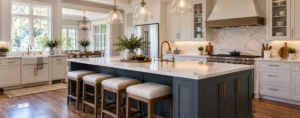
A dark island becomes a focal point within lighter surrounding cabinetry. This arrangement can suit an open kitchen where the island is visible from the living or dining area.
Compare the island finish with nearby furniture and flooring. Check the view from adjoining rooms as well as from inside the kitchen.
Light Upper Cabinets With Dark Lower Cabinets
Light upper cabinets keep the surfaces at eye level visually lighter. Dark lower cabinets add depth beneath the countertop.
Full-height pantry cabinets and refrigerator enclosures need a deliberate finish choice. Review them in the layout so they connect naturally with the upper and lower cabinet runs.
White Cabinetry With a Dark Wood Feature
A wood island or selected cabinet run introduces grain and warmth alongside white doors. Compare the wood sample with flooring and nearby furniture to avoid an unwanted undertone clash.
Keep the countertop and backsplash selections in the same review. Both cabinet finishes should work with the surfaces between and above them.
How to Choose the Right Cabinets for Your Kitchen
When comparing light vs dark kitchen cabinets, use actual finished samples and a consistent set of specifications.
- Identify the materials you are keeping. Include flooring, countertops, backsplash, appliances, and wall finishes.
- Check daylight and evening lighting. Review the room at the times you normally cook and spend time there.
- Request finished cabinet-door samples. These show the actual color, grain, surface texture, and sheen more accurately than a screen image.
- Position samples vertically. Hold them beside the countertop and backsplash, then compare them with the flooring.
- Inspect different angles. Look for glare, fingerprints, undertone changes, and how the finish appears from adjoining rooms.
- Compare matching quotes. Confirm the cabinet line, door material, accessories, and installation scope.
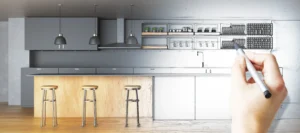
- Review the complete layout. Use a 3D preview to assess where each finish appears, then confirm the colors with physical samples.
Choose white or off-white when you want to reduce the visual weight of extensive cabinetry and create a lighter backdrop. Choose dark cabinetry when you prefer stronger definition and the samples work with your room’s lighting. Consider two-tone cabinets when you want to emphasize an island or keep the upper cabinetry lighter.
Choose Cabinet Colors With the Whole Kitchen in Mind
Bring your preferred cabinet samples together with the countertop, backsplash, and flooring before approving the order. Check them during the day and evening, then confirm the finish care requirements and installation scope.
For homeowners in Columbia and surrounding Maryland communities, VCT Kitchen and Bath provides cabinet planning and installation with 3D design support. Request a free in-home estimate to compare cabinet finishes and plan storage around how you use your kitchen.
Frequently Asked Questions
Before approving your cabinet finish, check how it handles discoloration, cleaning, and repairs. If you are updating existing cabinets, assess their condition and layout as well.
Do White Kitchen Cabinets Turn Yellow?
Some finishes can discolor over time. A yellow appearance may also come from surface residue rather than a change in the coating. Ask about the manufacturer’s finish characteristics and cleaning instructions. For existing cabinets, identify the cause before applying stronger cleaners.
Can Dark Kitchen Cabinets Work With Dark Floors?
Yes. Compare the undertones and check how clearly the cabinet fronts stand apart from the floor. Lighter countertops, walls, or backsplash materials can provide separation. Review the combination under evening lighting before deciding.
Are Matte Dark Cabinets Easier to Maintain Than Glossy Cabinets?
Maintenance depends on the specific coating. Glossy surfaces may reveal fingerprints and reflections, while matte finishes may show oils or rubbing marks. Inspect a finished sample and ask which cleaning products and methods are suitable.
Can I Change Cabinet Color Without Replacing the Cabinets?
Painting or refinishing may be suitable when the cabinet boxes and doors are sound and the layout meets your needs. Refacing may be another option for some cabinet systems.
Ask a contractor to inspect the material, surface condition, and preparation required. If the kitchen also needs better storage or a different layout, compare the cost and benefits of updating the existing cabinets with replacement.