
Choose the right bathroom remodeling contractor in Maryland by verifying their current MHIC license, checking insurance and comparable bathroom projects, and comparing detailed written proposals. Before hiring, confirm how the contractor will manage waterproofing, permits, material selections, unexpected repairs, payments, and communication.
When reviewing bathroom remodeling services, look for a team that can explain how the proposed design will be built. The estimate should connect your layout and finish choices with the preparation, installation, and project coordination they require.
Use the following steps to build a shortlist, ask better questions, and choose a contractor whose experience and proposal fit your bathroom.
1. Define Your Bathroom Project Before Contacting Contractors
Give each contractor the same description of your project so their recommendations and estimates start from comparable information.
Explain what currently causes problems. You may need more vanity storage, an easier-to-enter shower, better lighting, or repairs to a leaking bathing area. Separate those needs from optional upgrades such as heated flooring or custom glass.
Also identify how much you expect to change:
| Project scope | Experience to look for |
| Fixture and finish updates | Careful measurements, product compatibility, installation, and protection of retained surfaces |
| Tub-to-shower conversion | Shower-base planning, drain connections, waterproofing, enclosure coordination, and access |
| Complete bathroom renovation | Demolition, trade coordination, shower construction, ventilation, material planning, and inspections |
| Layout changes | Assessment of plumbing routes, electrical work, structural implications, and permit requirements |
Prepare bathroom photos, approximate dimensions, inspiration images, a working budget, and your preferred timing. Tell contractors whether the bathroom is your household’s only full bathroom.
You do not need every fixture selected before a consultation. You do need enough detail to explain what a successful remodel should improve.
2. Verify Maryland Licensing and Insurance
Check credentials before paying a deposit or committing to design and construction services. Verify the business you will actually hire, including the information shown on its proposal and contract.
Check the Contractor’s Current MHIC License
Use Maryland’s official Maryland Home Improvement Commission license search to check the contractor’s current status. Compare the business information and license number with the documents you receive.
If the names differ, ask for an explanation and supporting documentation before proceeding. A license number printed on a website does not establish that it belongs to the business presenting your contract.
You can also contact MHIC to ask whether complaints have been filed and whether they remain open or have been resolved. Consider the circumstances, response, and resolution when evaluating that information.
Ask who will perform plumbing and electrical work and how their applicable trade credentials will be checked. An MHIC license does not establish that everyone involved holds every relevant trade license.
Request Current Insurance Documentation
Request a current liability insurance certificate identifying the contracting business. Clarify coverage questions with the insurance provider, including whether coverage will remain current during the proposed work.
Ask how workers’ compensation coverage applies to employees and subcontractors involved in your project. Get clear answers about who is responsible for the people entering your home.
A licensed bathroom remodeling contractor should be willing to provide the information needed to verify the business and discuss these responsibilities.
3. Read Reviews of Bathroom Projects Similar to Yours
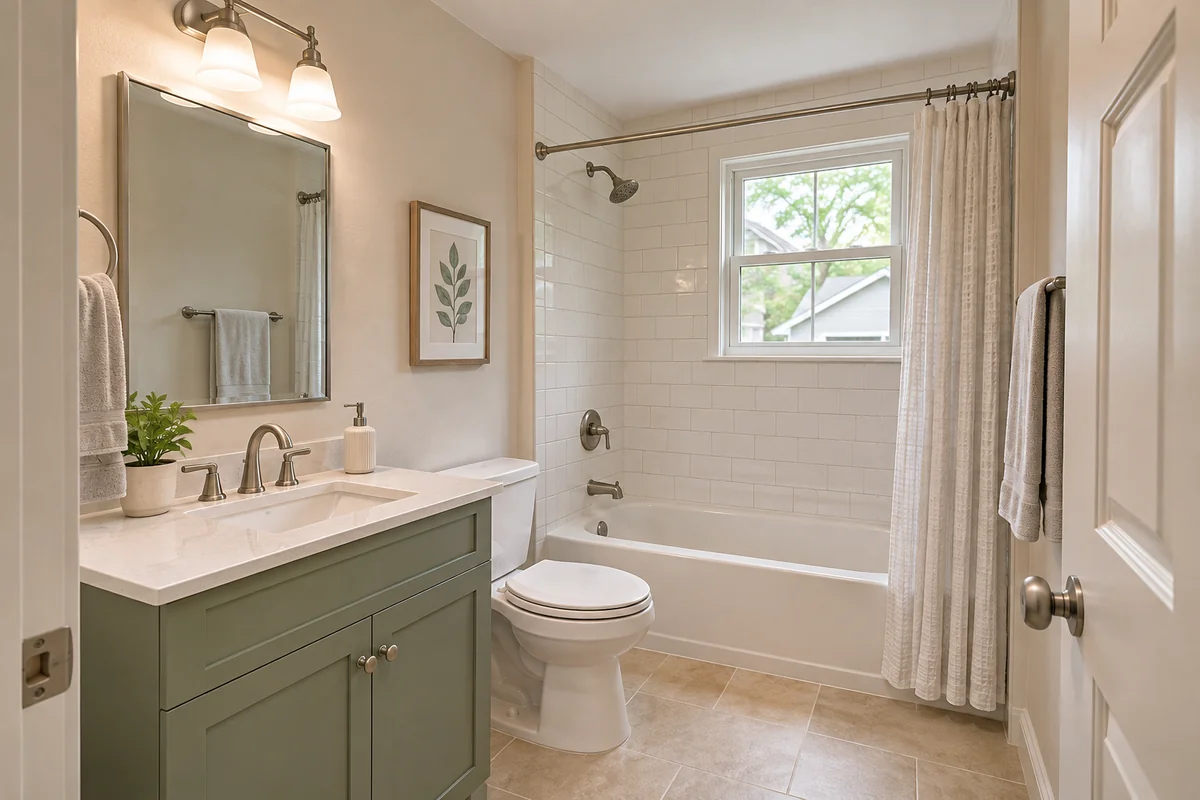
Look for evidence that the contractor has handled the type of work you are planning. A portfolio of powder room updates offers limited insight into experience rebuilding a tiled shower or relocating bathroom fixtures.
Review finished projects for details relevant to your goals:
- Shower entrances, enclosures, benches, and niches.
- Vanity storage and countertop space.
- Tile layouts and transitions.
- Lighting placement and mirror coordination.
- Door, drawer, and fixture clearances.
Ask what the contractor designed, supplied, installed, and managed on the projects shown. Progress photos can also help explain preparation and work that becomes concealed.
Look for recurring comments about communication, cleanliness, changes, scheduling, and follow-up service. Specific descriptions of how a problem was handled are more useful than a rating alone.
Then request references from comparable bathroom projects. Ask homeowners whether the scope was clear, how changes were approved, and whether the contractor addressed outstanding items after installation.
4. Ask How They Plan the Layout and Materials 
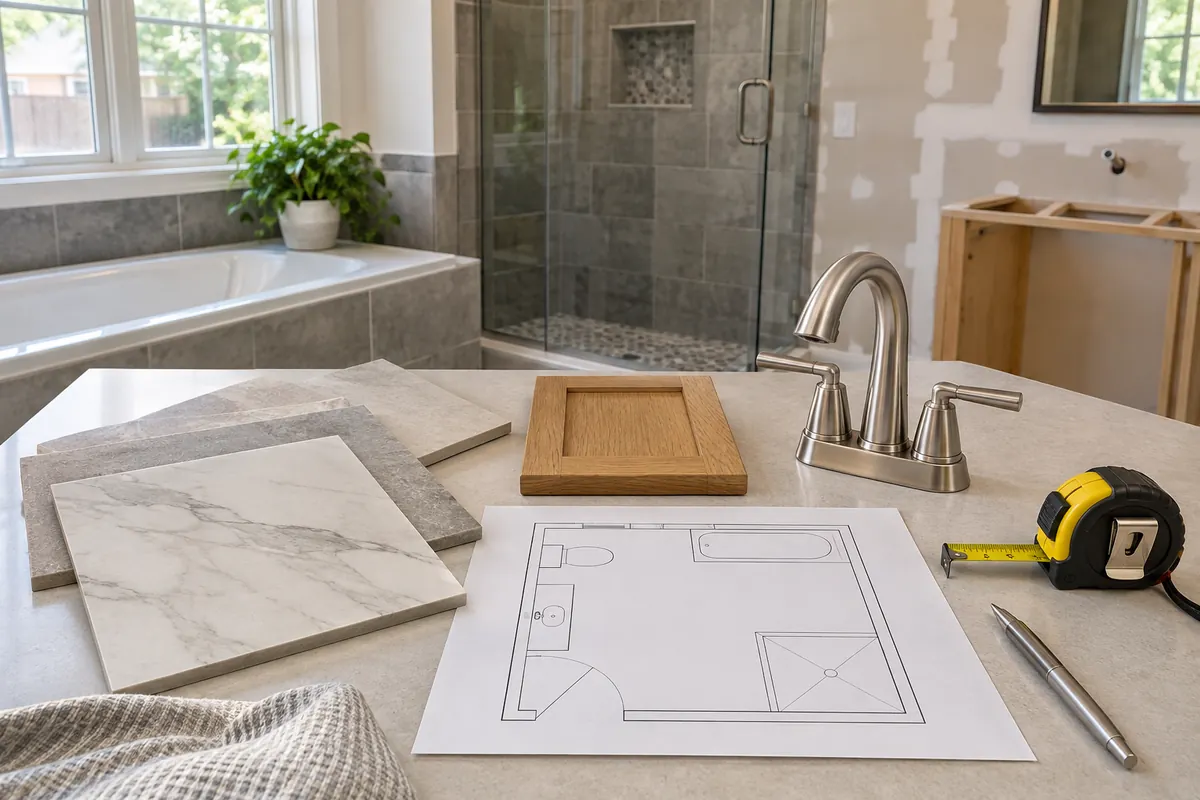
A useful consultation should connect design choices with everyday use. Ask the contractor to explain how the proposed layout addresses your current problems and which compromises remain.
For example, a wider vanity may add storage but reduce space beside the toilet. A shower bench may improve comfort while reducing standing space. A different shower-door arrangement may affect access to nearby fixtures.
Check Measurements and Clearances Before Ordering
Ask who confirms the final dimensions and product compatibility. The review should account for door swings, drawer access, shower entry, fixture placement, and the space needed to use the room comfortably.
If 3D design is available, use it to review layout and finish choices. Confirm that final measurements and installation details will also be checked before products are ordered.
Discuss Cleaning and Maintenance
Ask how the proposed materials fit your cleaning habits and maintenance expectations. Discuss tile patterns, grout joints, shower glass, vanity finishes, and access around fixtures. Request care information for the actual products being considered. A contractor should explain practical trade-offs clearly enough for you to choose between options.
5. Compare Detailed Estimates on Equivalent Scope
Ask each shortlisted contractor to price the same agreed project. If one recommends a different approach, request a clear explanation of what changes and why.
Use this table to identify gaps between proposals:
| Estimate item | What to compare |
| Demolition and disposal | Materials removed, debris handling, and disposal charges |
| Home protection | Floor protection, dust control, access routes, and cleanup |
| Shower construction | Base, drain, preparation, waterproofing, niches, and enclosure |
| Trade work | Plumbing, electrical, ventilation, and fixture connections |
| Products and finishes | Specifications, quantities, installation, and accessories |
| Allowances | Amounts included for products not yet selected |
| Permits and inspections | Fees, applications, and coordination |
| Completion work | Painting, trim, adjustments, and final cleanup |
| Exclusions | Purchases and tasks you must arrange separately |
Understand Allowances Before Comparing Totals
An allowance is a budget amount included for an item you have not selected. For illustration, one proposal might include a $1,000 vanity allowance and another a $2,000 allowance. That creates a $1,000 difference before comparing delivery, tax, installation, or other work.
Ask what each allowance includes and how selections above or below it affect the contract price. Also confirm whether the amount shown is a fixed price or an estimate subject to defined changes.
For broader planning, review the factors affecting bathroom remodel costs. Keep your contractor comparison tied to the actual scope and products proposed.
6. Review the Contract, Deposit, and Warranty
Read the final contract alongside the proposal, selections, and drawings it incorporates. Make sure verbal agreements appear in the documents you sign.
Confirm the Written Scope and Approximate Dates
Maryland requires written, signed home improvement contracts that identify the contractor and MHIC license number, describe the work and materials, and include approximate start and substantial-completion dates.
Also check payment terms, exclusions, change procedures, and responsibilities for supplies and permits. Receive your signed copy before work starts.
Ask how the contractor distinguishes substantial completion from final outstanding items so both parties understand the schedule and closeout process.
Check the Deposit and Payment Schedule
Maryland’s current home improvement guidance prohibits payment before the contract is signed and limits the deposit to one-third of the contract price.
That limit is a ceiling; the deposit amount can be negotiated. Agree on clear terms for later payments. Negotiating payments around defined stages of completed work can help you understand when money becomes due. Maryland’s deposit rule does not itself prescribe the later payment schedule. Keep records of payments, approved changes, and important project communications.
Understand Installation and Product Warranties
Request written installation warranty terms, including coverage, duration, exclusions, and the service-request process. Product warranties may have separate conditions. Ask who handles a claim involving a fixture, enclosure, or other supplied product and what documentation you should retain. Confirm how the final walkthrough, outstanding-item list, care instructions, and relevant inspection documentation will be handled.
7. Confirm Project Management and Bathroom Downtime
Find out who becomes your main contact once construction begins. Ask who supervises installation, coordinates subcontractors, and communicates decisions.
Discuss material readiness and the sequence of work before agreeing to demolition. Some selections must be available early; custom components may require measurements later in construction.
Clarify:
- When the toilet, shower, or entire bathroom will be unavailable.
- Whether water shutoffs affect other rooms.
- How workers will access and protect the home.
- Where materials and tools will be stored.
- How often updates will arrive.
- How delays or changes will be communicated.
Separate the overall project schedule from the period when the bathroom cannot be used. If it is your only full bathroom, agree on a workable household plan before construction starts.
8. Recognize Warning Signs and Make Your Final Choice
Pause if a contractor cannot provide verifiable credentials, a clear scope, or understandable payment terms.
| Warning sign | What to resolve before proceeding |
| License information does not match the proposal | Verify the contracting business through official records |
| Deposit exceeds one-third | Request terms consistent with Maryland’s requirements |
| Scope says only “complete bathroom remodel” | Obtain specific work, materials, allowances, and exclusions |
| Waterproofing answers remain vague | Request the assembly and installation-check process |
| Permit responsibility is unclear | Confirm requirements and document who handles them |
| Discount depends on immediate signing | Take time to review the complete agreement |
| Extra work will be priced afterward | Establish written approval before additional work proceeds |
Once the proposals are comparable, evaluate relevant experience, design guidance, communication, supervision, scheduling, and warranty terms.
Before hiring a bathroom remodel contractor, confirm that you have:
- Verified current licensing and reviewed insurance documentation.
- Checked similar projects and homeowner references.
- Reviewed the layout and major product choices.
- Understood waterproofing, trade, and permit responsibilities.
- Compared scope, allowances, exclusions, and change procedures.
- Agreed on contract terms, payments, and approximate dates.
- Confirmed communication, bathroom downtime, and project closeout.
Use these checks for referrals and companies found through a “bathroom contractor near me” search. Proximity can help with coordination, while the evidence and proposal show whether the contractor fits your project.
Discuss Your Bathroom Project With VCT Kitchen & Bath
Bring your project goals, bathroom photos, inspiration images, and contractor checklist to VCT Kitchen & Bath. Review the layout, material choices, installation scope, and project responsibilities together.
VCT offers bathroom design and installation coordination, including free 3D design planning. Request a free in-home estimate to discuss your bathroom and ask specific questions about the proposed work.
FAQs
Should I Hire a Bathroom Specialist or a General Remodeling Contractor?
Choose based on comparable experience and the ability to manage your scope. Either should explain shower construction, trade coordination, supervision, and quality checks. For projects involving adjacent rooms or structural changes, ask how the broader renovation will be managed.
How Many Bathroom Remodeling Estimates Should I Get?
Two or three detailed estimates can provide a useful comparison when contractors receive the same project brief. Resolve differences in scope and allowances before comparing totals. Additional quotes offer limited value if the work remains unclear.
What If My Preferred Contractor Cannot Start Immediately?
Request a realistic start window and a list of the steps required beforehand. Design decisions, ordering, and permit preparation may need time before construction. Evaluate whether the plan fits your household and how clearly the contractor communicates its assumptions.
What Should I Do If a Contractor’s License Details Do Not Match?
Pause signing and payment. Ask for an explanation and consistent documentation, then verify the business through official MHIC resources. Resolve the discrepancy before entering an agreement.