Kitchen remodeling and kitchen renovation are often treated as interchangeable terms, but they can describe very different levels of work. For homeowners, understanding that distinction matters because it can affect the project scope, budget, timeline, and the amount of construction required.
In simple terms, a kitchen renovation usually improves what is already there, while a kitchen remodel can change how the space is designed and functions. Knowing whether you need a kitchen remodel or renovation can help you make better decisions before choosing materials, setting a budget, or beginning construction.
What Is the Difference Between Kitchen Remodeling and Renovation?
The main difference between kitchen remodeling and renovation comes down to how much of the existing kitchen changes.
A kitchen renovation generally updates the existing space without significantly changing its basic layout. The cabinets, countertops, flooring, lighting, appliances, and finishes may all be replaced, but the kitchen usually keeps a similar footprint.
Kitchen remodeling goes further. A remodel may change the layout, relocate appliances, redesign cabinetry, open walls, move plumbing or electrical connections, or make other changes that improve how the kitchen functions.
| Kitchen Renovation | Kitchen Remodeling |
| Updates the existing kitchen | Can significantly transform the kitchen |
| Usually keeps the current layout | May change the layout or footprint |
| Often focuses on finishes and materials | May involve structural and functional changes |
| Generally involves less construction | Can require multiple trades and more planning |
| Works well when the layout already functions | Better suited to layout or usability problems |
When comparing kitchen remodeling vs renovation, neither option is automatically better. The right choice depends on what is currently wrong with the kitchen and what you want the finished space to accomplish.
What Does a Kitchen Renovation Typically Include?
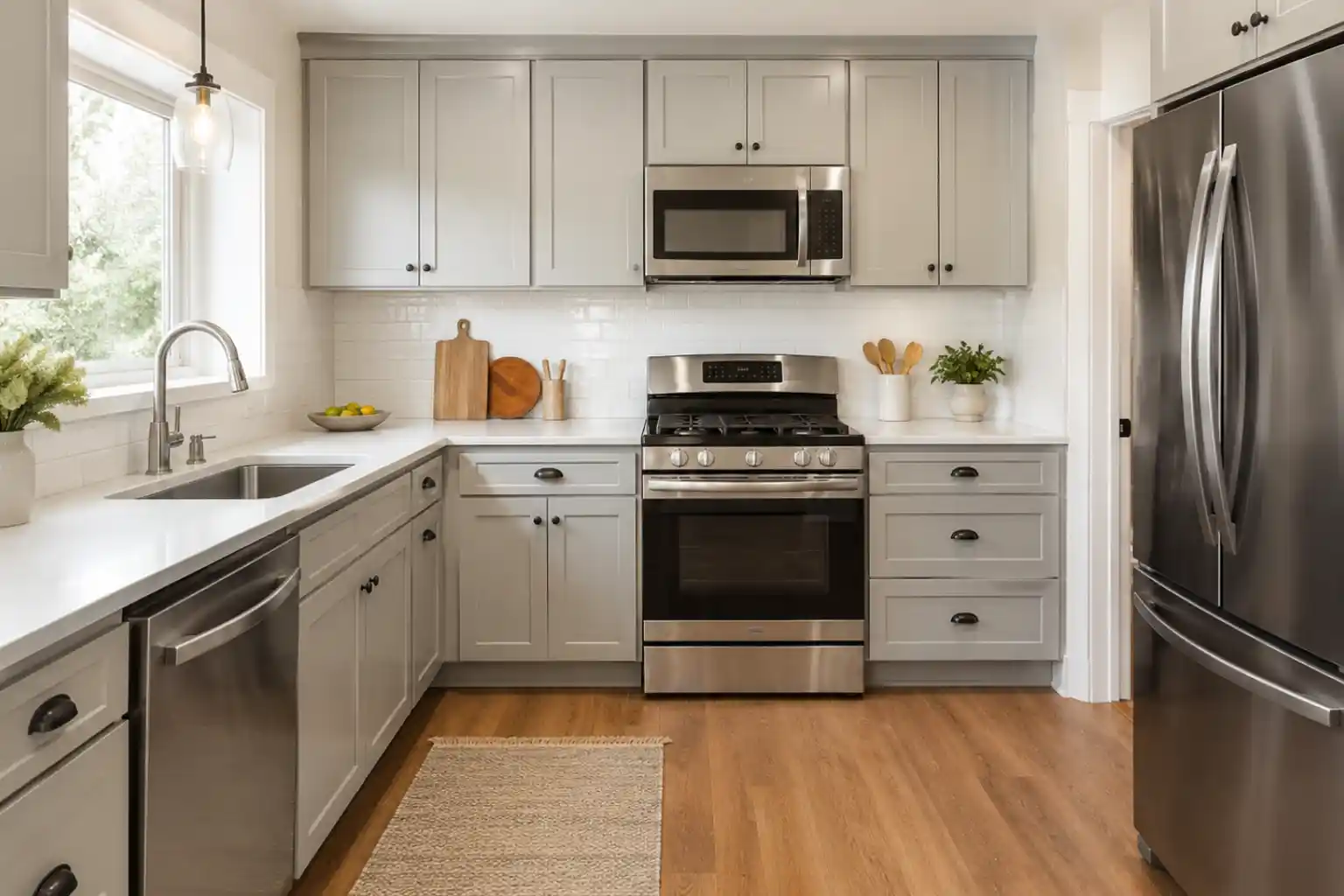
A kitchen renovation is often a good fit when homeowners are satisfied with the overall arrangement of the room but want to update an aging or outdated appearance.
For example, an older kitchen may have a practical cabinet layout but worn countertops, dated flooring, inefficient lighting, or finishes that no longer match the rest of the home. In this situation, replacing those materials can give the kitchen a fresh appearance without redesigning the entire space.
Common kitchen renovation ideas include installing new countertops, replacing cabinet doors or cabinetry, updating the backsplash, changing flooring, upgrading light fixtures, installing a new sink and faucet, or replacing older appliances.
The important distinction is that these improvements generally work within the existing layout. The refrigerator may remain in the same location, the sink stays along the same wall, and the overall traffic pattern remains largely unchanged.
A renovation can therefore be a practical option when the kitchen already works well but needs better materials, updated finishes, or improved comfort.
What Does a Kitchen Remodel Typically Include?
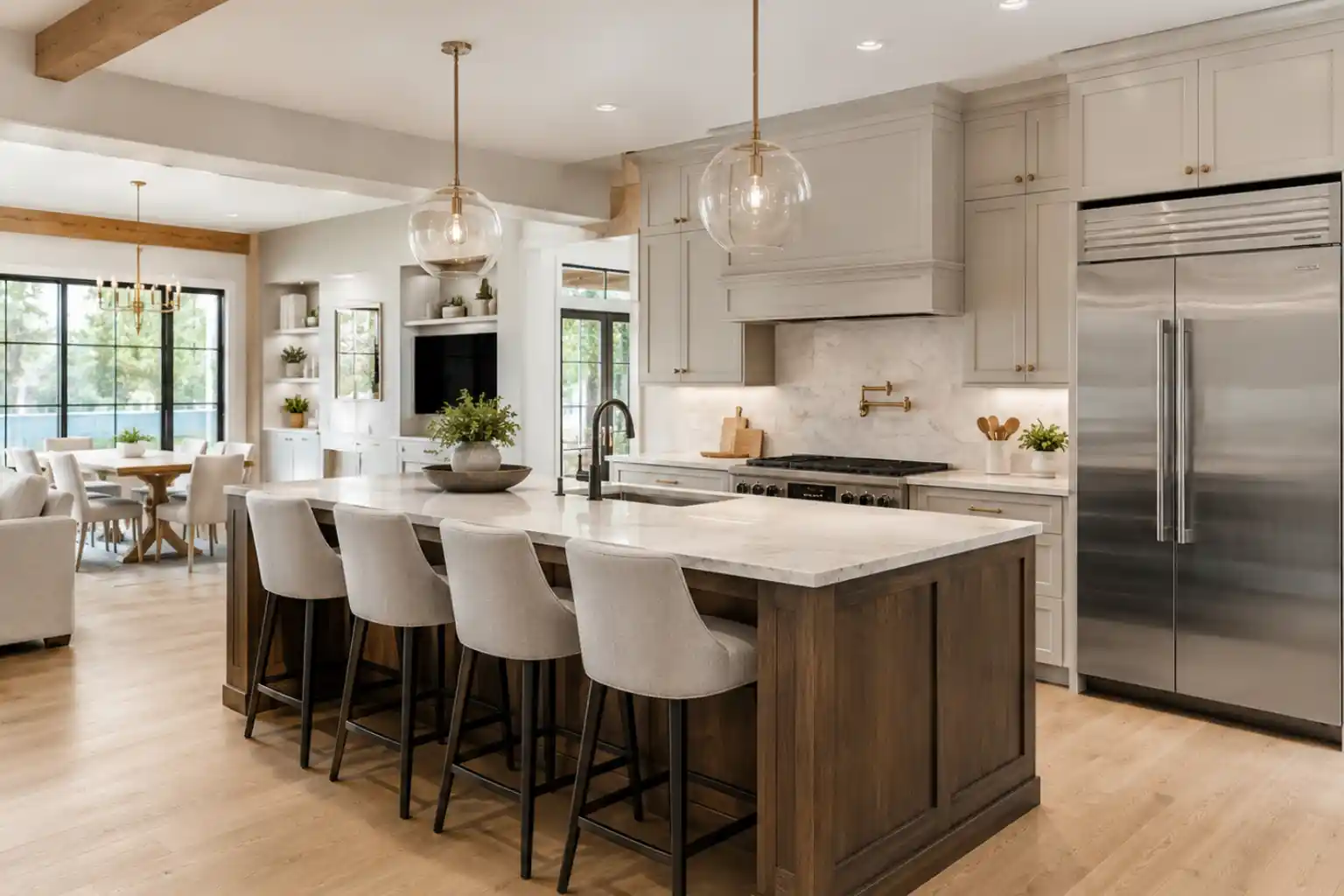
A kitchen remodel becomes more appropriate when the problems go beyond appearance. Some kitchens may have recently updated finishes but still feel difficult to use because the underlying layout does not support the homeowner’s needs. There may be too little counter space, limited storage, awkward appliance placement, poor traffic flow, or a wall that separates the kitchen from adjoining living areas.
Kitchen remodeling gives homeowners more flexibility to address those issues. The project may involve changing the cabinet configuration, adding an island, relocating appliances, moving plumbing fixtures, adjusting electrical connections, expanding work areas, or reconfiguring the room.
For example, simply installing new cabinets would not solve a kitchen where the refrigerator blocks a major walkway. A remodel could reposition appliances and cabinetry so the entire workspace functions more efficiently.
Good kitchen remodeling ideas should therefore focus on more than appearance. Layout, storage, lighting, workflow, seating, appliance placement, and the way the kitchen connects to surrounding rooms can all influence the final design.
Homeowners planning a more substantial transformation can explore professional kitchen remodeling services to determine which design and construction changes make sense for their space.
Kitchen Remodel or Renovation: Which Is Right for Your Home?
Choosing between a kitchen renovation or remodel starts with evaluating how well the existing kitchen works.
Renovation May Be Enough When Your Layout Already Works
If the current layout feels comfortable and appliances, counters, storage, and walkways are positioned reasonably well, there may be little reason to change the structure of the room.
In that situation, renovation can focus the budget on the areas homeowners notice most. Better countertops, updated cabinetry, improved lighting, new flooring, modern fixtures, and coordinated finishes can make a major visual difference without rebuilding the kitchen.
Renovation can also make sense when materials have reached the end of their useful life, but the basic design still supports everyday cooking, dining, and storage needs.
Remodeling Makes More Sense When the Kitchen Itself Doesn’t Work
A remodel may be the better investment when homeowners regularly struggle with the way the kitchen functions.
Perhaps there is not enough prep space next to the stove. Cabinets may be difficult to access. The island might interrupt traffic rather than improve it. Appliances may be poorly positioned, or the kitchen may feel disconnected from the dining and living areas.
These are problems that new finishes alone cannot correct. Instead of deciding based only on whether you want a newer-looking kitchen, consider how the space supports your daily routine. A kitchen that looks beautiful but still has poor storage or an inefficient layout may continue to be frustrating after the renovation is complete.
How Scope Affects Cost, Timeline, and Project Complexity
The scope of work is one of the biggest practical differences between remodeling vs renovation. Because a renovation typically works within the existing kitchen arrangement, it may require fewer construction changes. The project can still be substantial, especially when cabinets, countertops, flooring, appliances, and lighting are all being replaced, but maintaining existing plumbing and electrical locations often simplifies the work.
A remodel can involve more moving parts. Changing the layout may require demolition, electrical modifications, plumbing work, new cabinetry measurements, additional design planning, or structural work, depending on the project.
This is why the cost and timeline of two kitchens of similar size can be very different. One homeowner may replace nearly every visible surface while keeping the layout intact. Another may redesign the same-size kitchen by moving appliances, changing walls, and creating a completely new cabinet configuration.
For that reason, homeowners comparing renovation vs remodeling should focus more on the actual scope of work than broad average project prices. A detailed design and estimate provide a much more useful picture of what a particular kitchen will require.
A Kitchen Project Can Include Both Renovation and Remodeling
Not every project fits neatly into one category. A homeowner may keep most of the kitchen’s existing footprint while changing one important part of the layout. For example, the sink and major appliances could remain where they are while an unused peninsula is removed and replaced with an island. New cabinets, countertops, flooring, and lighting could then be installed throughout the rest of the room.
That project contains elements of both remodeling and renovation. The same is true when homeowners preserve part of an existing kitchen while redesigning one problem area. Perhaps the overall layout works, but additional pantry storage or a better seating area requires modifying cabinetry and electrical connections.
This is why the terms kitchen remodel vs renovation are useful for understanding general project scope, but they should not limit the design. What matters most is identifying which parts of the current kitchen work well enough to keep and which parts need to change.
Plan the Right Kitchen Project for Your Maryland Home
Before deciding how extensive your kitchen project should be, look carefully at the existing space. Consider whether the layout supports everyday cooking, whether storage is convenient, whether countertops provide enough usable workspace, and whether lighting and appliance placement make the room comfortable to use.
It is also worth separating genuine functional problems from features that simply look dated. Keeping parts of a kitchen that already work well can help direct more of the budget toward improvements that create noticeable value.
For homeowners in Maryland, VCT Kitchen And Bath can help evaluate the existing kitchen, develop a practical design, select appropriate materials, and determine how much remodeling is actually necessary. The company’s approach covers design and installation, allowing homeowners to plan the project around both appearance and long-term functionality.
Renovate What Works or Remodel What Doesn’t
The simplest way to think about kitchen renovation vs remodeling is to consider what needs to change. If the existing layout already works and the main goal is updating materials, finishes, and fixtures, a renovation may provide everything you need.
If poor layout, limited storage, awkward traffic flow, or appliance placement is holding the kitchen back, a remodel provides greater flexibility to redesign the space around the way your household actually uses it.
VCT Kitchen And Bath helps homeowners in Maryland plan kitchen projects based on their space, priorities, and budget. Whether the project requires targeted updates or a more complete kitchen transformation, thoughtful planning can help create a kitchen that looks better and works better for years to come.
Frequently Asked Questions
Is kitchen renovation the same as kitchen remodeling?
Not exactly. A kitchen renovation usually improves the existing space without making major changes to the layout, while kitchen remodeling can involve changing the layout, moving appliances, adjusting plumbing or electrical systems, and redesigning how the kitchen functions.
Is it cheaper to renovate or remodel a kitchen?
In most cases, renovation is less expensive because it usually involves fewer structural and layout changes. A remodel can cost more when the project includes moving plumbing, electrical work, walls, appliances, or creating a new cabinet configuration. The final cost depends on the scope of work, materials, and size of the kitchen.
Should I remodel or renovate my kitchen?
A renovation may be enough if you are happy with your current layout but want new cabinets, countertops, flooring, lighting, or finishes. Remodeling is often the better choice if the kitchen has poor traffic flow, limited storage, insufficient counter space, awkward appliance placement, or other functional problems.
Can I renovate a kitchen without changing the layout?
Yes. Many kitchen renovations keep the existing footprint while updating cabinets, countertops, backsplash, flooring, appliances, sinks, faucets, and lighting. Keeping major plumbing and appliance locations in place can also simplify the project.
Does a kitchen remodel always require structural changes?
No. A kitchen remodel does not always require removing walls or making major structural changes. It can also involve redesigning cabinetry, changing appliance locations, adding an island, improving storage, or modifying the layout to make the kitchen more functional.
How long does a kitchen renovation or remodel take?
The timeline depends on the size and complexity of the project. A straightforward renovation that keeps the existing layout may take less time than a full remodel involving demolition, layout changes, plumbing, electrical work, custom cabinetry, or structural modifications. A detailed project plan provides the most accurate timeline.
Can a kitchen project include both remodeling and renovation?
Yes. Many kitchen projects include elements of both. A homeowner might keep most of the existing layout while changing one section, relocating an appliance, adding an island, and updating cabinets, countertops, flooring, and lighting throughout the room.
Do I need professional kitchen remodeling services?
Professional help can be especially valuable when a project involves layout changes, cabinetry planning, plumbing, electrical work, structural modifications, or coordination between multiple trades. An experienced remodeling team can also help determine which parts of the kitchen should be updated and which changes require a more complete redesign.