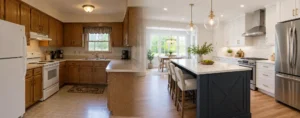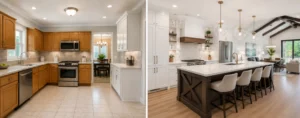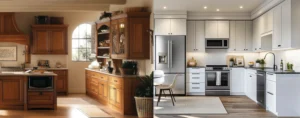
Modern farmhouse kitchen design combines simple cabinetry, warm neutral colors, natural wood, classic materials, and contemporary functionality. The result is a kitchen that feels comfortable and welcoming without becoming overly rustic or dependent on farmhouse-themed décor.
What makes this style work is balance. A farmhouse sink, Shaker cabinets, or wood island can provide traditional character, while clean lines, efficient storage, integrated lighting, and modern appliances keep the room practical for everyday life.
If you are planning a kitchen renovation, focus first on how the space needs to function. Then build the farmhouse character through cabinetry, colors, materials, lighting, and a few carefully chosen details. This approach creates a kitchen that feels personal rather than copied from a trend.
The Modern Farmhouse Kitchen Formula
You do not need dozens of decorative details to create the look. Most successful farmhouse kitchen designs are built around a few core elements:
- Simple cabinet profiles, especially Shaker-style doors
- Warm whites, earthy neutrals, or muted colors
- Natural wood for warmth and texture
- Quartz or natural stone countertops with restrained patterns
- Classic or handmade-look backsplash tile
- A limited mix of metal finishes for hardware and fixtures
- Layered lighting for task work and atmosphere
- Functional storage and a well-planned layout
Not every kitchen needs all eight. A smaller kitchen may rely on cabinetry, color, lighting, and one wood accent, while a larger remodel may include an island, apron-front sink, statement range hood, and more detailed material combinations.
The important part is creating a consistent design language rather than filling the kitchen with anything labeled “farmhouse.”
What Makes a Modern Farmhouse Kitchen Feel Modern?
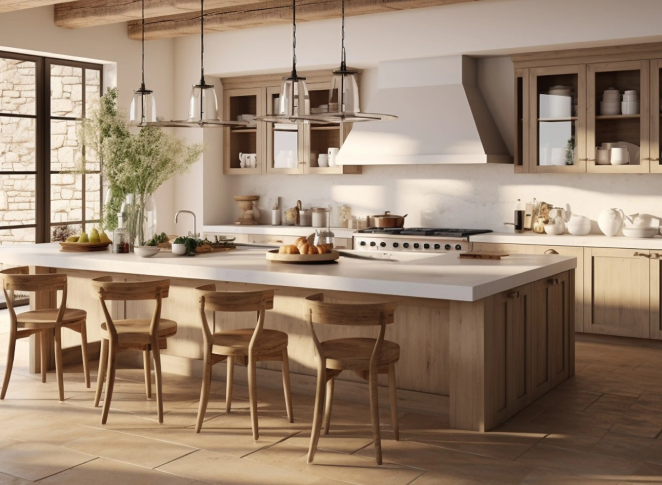
Traditional farmhouse interiors are often associated with heavier wood, vintage details, rustic surfaces, and decorative accessories. Modern farmhouse style keeps some of that warmth while simplifying the overall room. Think of a farmhouse character with contemporary discipline.
A modern version might pair white Shaker cabinets with a natural oak island, clean quartz countertops, simple black hardware, and modern pendant lighting. Another kitchen might use muted green cabinets, warm stone surfaces, brass fixtures, and stainless-steel appliances.
Neither has to look like an old country kitchen. One of the most useful principles when planning this style is simple:
The goal is not to make a new kitchen operate like an old farmhouse kitchen. It is to capture the warmth of farmhouse design while benefiting from modern kitchen planning.
That means storage, circulation, lighting, ventilation, appliance placement, and everyday usability should carry just as much weight as color and décor.
Modern Farmhouse vs. Traditional Farmhouse Kitchen
Understanding the difference can make design decisions much easier.
| Feature | Traditional Farmhouse | Modern Farmhouse |
| Cabinetry | Detailed wood or traditional profiles | Shaker and simpler profiles |
| Color palette | Cream, brown, natural wood | Warm neutrals with controlled contrast |
| Wood | Often dominant | Used selectively for warmth |
| Hardware | Vintage or decorative | Black, brass, bronze, or nickel |
| Backsplash | Traditional tile and patterns | Cleaner tile or full-height surfaces |
| Appliances | Traditional or freestanding appearance | Modern or integrated appliances |
| Décor | More rustic and decorative | Restrained and intentional |
| Layout | Based on traditional room divisions | Prioritizes efficient, open functionality |
| Storage | Conventional cabinets | Customized drawers and organizers |
| Overall feeling | Country and rustic | Warm, clean, and transitional |
This distinction is especially useful when collecting farmhouse kitchen ideas online. A room can contain farmhouse elements without needing distressed finishes, barn-inspired details, or rustic accessories everywhere.
Build the Design Around a Warm, Flexible Color Palette
Color is one of the easiest ways to determine whether a farmhouse kitchen feels fresh or overly traditional.
Warm Whites and Soft Neutrals
White cabinetry remains popular because it creates a bright foundation, but the specific shade matters.
Instead of automatically choosing a crisp, cool white, consider warmer tones such as:
- Cream
- Ivory
- Warm white
- Greige
- Mushroom
- Light taupe
- Soft beige
These colors generally pair more naturally with wood grain, brass, bronze, warm stone, and other farmhouse materials.
Before committing to a cabinet or wall color, view samples beside the planned countertop, flooring, backsplash, and hardware. Undertones that are barely noticeable individually can become obvious once materials are placed together.
Muted Colors Can Add More Personality
A modern farmhouse kitchen does not need to be white. Sage, olive, muted blue, charcoal, earthy gray, and deeper taupe can create character while keeping the palette grounded.
These colors work particularly well on:
- Kitchen islands
- Lower cabinets
- Pantry cabinetry
- Beverage stations
- Range hood surrounds
For example, warm white perimeter cabinets paired with a sage island create more dimension than an entirely white room without making the kitchen visually heavy.
Natural Wood Prevents Neutral Kitchens From Feeling Flat
Wood is often what gives a farmhouse kitchen its warmth.
It can appear through:
- An island
- Flooring
- Floating shelves
- Cabinetry
- Ceiling details
- Bar stools
- A range hood accent
You do not need wood on every surface. In many modern farmhouse kitchen design ideas, one well-placed wood element provides enough contrast against painted cabinetry and stone countertops.
Modern Farmhouse Kitchen Cabinets and Storage
Cabinetry usually occupies more visual space than any other kitchen feature, which makes it one of the most important design decisions.
Why Shaker Cabinets Work So Well
Shaker doors have enough structure to feel traditional but remain simple enough for a modern interior.
They also adapt easily to different finishes. The same cabinet profile can feel quite different in:
- Warm white
- Natural oak
- Sage green
- Charcoal
- Soft gray
- Deep blue
For a more contemporary farmhouse look, keep decorative moldings controlled. Too many corbels, ornate trim pieces, distressed finishes, or furniture-style details can quickly push the kitchen toward a more traditional country aesthetic.
Painted Cabinets vs. Natural Wood
You do not have to choose between them. A balanced kitchen might combine painted perimeter cabinets with a stained island. Another might use natural wood lowers with lighter upper cabinetry.
The goal should be visual connection. If the island is wood, for example, the flooring, stools, shelves, or nearby furniture may repeat a similar warmth without matching exactly.
Plan Cabinet Interiors Before Decorative Details
Farmhouse styling should never come at the expense of useful storage.
During a remodel, consider features such as:
- Deep drawers for cookware
- Tray and cutting-board dividers
- Pull-out trash and recycling
- Pantry pull-outs
- Spice storage
- Appliance garages
- Drawer organizers
- Corner-storage solutions
- Vertical storage for baking sheets
- Dedicated space for small appliances
Think about what currently creates clutter in your kitchen and design storage around those items. Cabinet filler requirements, appliance dimensions, door clearances, and drawer operation should also be resolved before cabinets are finalized. A beautiful elevation does little good if a refrigerator door cannot open comfortably or a drawer collides with an adjacent handle.
For homeowners undertaking major layout and cabinet changes, VCT Kitchen And Bath’s kitchen remodeling services provide a broader look at planning a coordinated renovation.
Countertops, Backsplashes, and Flooring That Work Together
Instead of choosing each finish independently, treat these surfaces as one material palette. A successful modern farmhouse kitchen often combines one visually active material with quieter supporting finishes.
If the countertop contains strong veining, for example, the backsplash may need to be simpler. If the flooring has significant variation, highly patterned tile can make the room feel busy.
Countertops
Quartz works well when homeowners want a more controlled appearance. Warm whites, subtle veining, soft beige, and restrained gray patterns can complement painted cabinets without overpowering them.
Natural stone countertops introduce more organic variation. Granite, quartzite, marble, and other stones can create beautiful farmhouse kitchens, but appearance and maintenance differ considerably between materials. View an entire slab whenever possible rather than making a final decision from a small sample.
A butcher block can also add warmth without covering the whole kitchen. It may work particularly well on an island, baking area, or smaller accent counter paired with stone elsewhere.
Backsplashes
A farmhouse backsplash does not need to be complicated.
Options that transition well between traditional and modern interiors include:
- Subway tile with subtle texture
- Handmade-look ceramic tile
- Elongated rectangular tile
- Natural stone
- Simple square tile
- Full-height countertop material
Tile scale, grout color, sheen, and installation pattern can completely change the effect. A slightly irregular handmade-look tile can introduce character to simple cabinetry, while a full-height stone or quartz backsplash produces a cleaner and more refined farmhouse interpretation.
Flooring
Wood flooring naturally complements farmhouse interiors, but it is not the only option.
Depending on the home and household needs, possibilities may include:
- Hardwood
- Engineered wood
- Wood-look flooring
- Porcelain tile
- Stone-look tile
Consider adjoining rooms as well. A kitchen floor that connects awkwardly with neighboring spaces can make an otherwise cohesive remodel feel disconnected.
The best material is not simply the one that looks good in a showroom. It should make sense for maintenance preferences, household activity, and the rest of the home.
Functional Features That Complete the Design
Once the core palette is established, larger features such as the island, sink, appliances, and lighting can shape how the kitchen actually works.
Kitchen Island
A farmhouse island should earn the space it occupies.
Before deciding on size or finish, determine its job. An island might provide:
- Food-preparation space
- Seating
- Drawer storage
- A sink
- A dishwasher
- Microwave placement
- Waste and recycling storage
- Serving space
- Electrical access
Trying to fit every function into one island can make it crowded. Circulation is especially important. Kitchen walkways need enough room for people to move while cabinet and appliance doors are open. This becomes particularly important around refrigerators, dishwashers, ranges, seating areas, and opposing cabinet runs.
A slightly smaller island with comfortable circulation is usually more useful than an oversized one that dominates the room.
Farmhouse Sink
An apron-front sink remains one of the clearest farmhouse references, but choose it based on function as well as appearance.
Consider:
- Single vs. divided basin
- Sink depth
- Fireclay, cast iron, stainless steel, or composite materials
- Cabinet compatibility
- Countertop installation
- Faucet placement
- Required support
Farmhouse sinks can affect the sink-base cabinet, so they should be selected early enough to coordinate with cabinetry and countertops.
Modern Appliances
Modern appliances do not conflict with farmhouse design. Stainless steel often provides an effective contrast against painted cabinets and natural materials. Panel-ready appliances can create a more integrated appearance for homeowners who prefer visual continuity.
Pay close attention to dimensions and door swings before finalizing cabinetry. Refrigerators, ovens, dishwashers, and ranges need adequate clearance, and ventilation requirements can influence the layout around the cooking area.
Lighting and Hardware
Good kitchen lighting should be layered rather than dependent on one fixture type.
Think in terms of:
- General ceiling lighting
- Task lighting
- Under-cabinet lighting
- Decorative pendants
- Accent lighting where appropriate
Pendant lights can strengthen the farmhouse look, but their size and position should relate to the island rather than simply filling ceiling space.
For hardware and fixtures, common choices include matte black, brass, bronze, brushed nickel, and polished nickel.
You can mix metals, but keep the palette limited. One dominant finish plus a secondary accent is usually easier to coordinate than several competing finishes.
10 Modern Farmhouse Kitchen Ideas to Consider
If you are gathering inspiration before a remodel, these combinations can provide a more concrete starting point.
1. White Shaker Cabinets With a Natural Oak Island
This combination creates immediate contrast while keeping the overall room bright. Repeat the wood tone subtly through shelving, stools, or nearby furniture.
2. Sage Green Cabinetry With Warm Stone
Muted green can create a softer farmhouse look than white. Pair it with restrained countertops and simple hardware rather than adding too many decorative elements.
3. A Full-Height Backsplash Behind the Range
Extending countertop material or carefully selected tile higher on the wall can make farmhouse cabinetry feel more refined and architectural.
4. A Statement Range Hood
The range hood can become a focal point without relying on décor. Consider a simple painted enclosure, wood accent, plaster-style finish, or cabinetry-integrated design.
5. An Apron-Front Sink With a Clean-Lined Faucet
The sink brings traditional character while a simpler faucet prevents the combination from feeling overly vintage.
6. Two-Tone Cabinetry
Use one finish for the perimeter and another for the island or lower cabinets. This creates depth while keeping the material palette controlled.
7. Open Shelving in One Strategic Area
Instead of replacing multiple upper cabinets, use one or two wood shelves near a coffee station, window, or unused wall. You gain visual warmth without losing too much hidden storage.
8. A Butcher-Block Accent
A wood work surface on part of the island can soften a kitchen dominated by stone, tile, and painted cabinetry.
9. Black-Framed Details
Black-framed windows, lighting, or small metal accents can create useful definition in a light kitchen. Keep them selective so the contrast does not become harsh.
10. Minimal Farmhouse Décor
Allow pottery, stools, woven textures, artwork, greenery, or serving pieces to provide personality. These details are easier to change than cabinetry or tile when tastes evolve.
How Much Does a Modern Farmhouse Kitchen Cost?
There is no single price for creating a modern farmhouse kitchen because the style can be achieved at very different remodeling levels.
Cost is influenced more by the scope of work and material selections than by the farmhouse aesthetic itself.
Important factors include:
- Kitchen size
- Stock, semi-custom, or custom cabinetry
- Countertop material
- Appliance selections
- Flooring
- Plumbing changes
- Electrical work
- Lighting
- Structural or wall changes
- Sink and fixture selections
- Tile installation
- Labor and project complexity
A kitchen that keeps its existing layout and updates finishes may require a very different investment from one that relocates plumbing, changes walls, adds cabinetry, installs new flooring, and replaces major appliances. When establishing a budget, separate design preferences from scope decisions.
For example, choosing a farmhouse sink instead of another sink may influence material and installation choices, but moving the sink to a new location can have a much greater effect on the overall project.
The same applies to islands. Changing an island color is mainly a design decision; adding a new island with electrical service, cabinetry, seating, and plumbing is a broader remodeling decision.
Common Modern Farmhouse Design Mistakes
Knowing what to leave out can be as important as knowing what to add.
Turning the Kitchen Into a Theme
Barn-inspired signs, heavily distressed finishes, rustic lighting, reclaimed wood, vintage hardware, shiplap, and farmhouse accessories can each add character. Using all of them together can make the room feel staged rather than natural.
Choose a few features with long-term value.
Making Every Surface White
An all-white kitchen can be bright, but white cabinets, white walls, white backsplash, pale counters, and light flooring may lack depth.
Natural wood, muted cabinet colors, interesting stone, or contrasting hardware can create more dimension.
Prioritizing Open Shelving Over Storage
Open shelves look attractive when styled carefully, but everyday kitchens contain appliances, pantry items, cleaning products, cookware, and dishes that homeowners may prefer to hide.
Use open storage where it improves the design, not simply because it appears frequently in inspiration photos.
Mixing Too Many Materials
More variety does not always mean more character. A wood island, patterned floor, dramatic countertop, decorative backsplash, mixed hardware, and statement range hood can all compete. Choose which feature should attract attention and let other materials support it.
Ignoring Appliance and Cabinet Clearances
Design drawings should account for more than cabinet dimensions.
Think about:
- Refrigerator door swing
- Dishwasher clearance
- Oven doors
- Drawer handles
- Adjacent cabinet doors
- Island seating
- Traffic paths
These details directly affect how comfortable the kitchen feels after installation.
Forgetting Ventilation
A beautiful cooking area still needs appropriate ventilation. Range selection, hood dimensions, ducting conditions, cabinetry, and ceiling configuration may all influence what is practical. Address these issues before the range hood becomes purely a decorative decision.
Treating Every Farmhouse Trend as Timeless
Some design principles have broad longevity: functional layouts, natural materials, simple cabinetry, quality lighting, and balanced proportions. Other farmhouse details are more trend-dependent.
These may include:
- Heavy shiplap
- Excessive rustic signage
- Distressed finishes
- Barn-door motifs
- Large amounts of open shelving
If you enjoy these features, consider using them in ways that are easier to change later.
Bringing Modern Farmhouse Style Into a Maryland Home
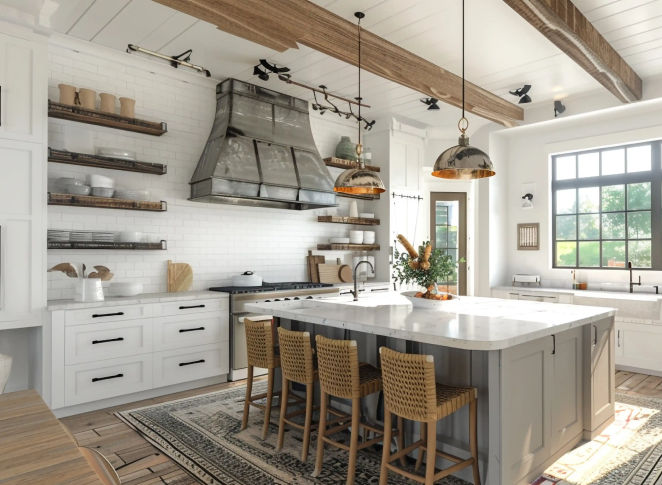
A successful kitchen should respond to the house it belongs to. Maryland homes vary significantly in age, architectural character, room size, and layout. A farmhouse-inspired remodel in an established Maryland home may require a different approach from a renovation in a newer open-concept property. Instead of imposing the same farmhouse formula everywhere, consider:
The Existing Architecture
If the rest of the home contains traditional trim, warm wood, and defined rooms, a slightly more transitional farmhouse kitchen may feel natural.
In a newer home with cleaner architecture, simpler cabinetry, a restrained palette, and fewer rustic details may create better continuity.
Natural Light
A kitchen with limited daylight may respond better to lighter cabinet finishes, reflective backsplash surfaces, and carefully planned artificial lighting.
Rooms with large windows may support deeper greens, charcoal islands, richer wood, or stronger contrasts without feeling dark.
Connections to Adjacent Rooms
Open kitchens should work visually with nearby living and dining spaces. Repeat selected materials or colors rather than designing the kitchen independently. A wood tone from the kitchen island might reappear in dining furniture, or a metal finish from the lighting might connect with nearby fixtures.
Everyday Household Needs
A family that cooks frequently may prioritize durable work surfaces and deep drawer storage. A household that regularly entertains may value island seating, serving space, beverage storage, or a better connection to dining areas.
Farmhouse style should adapt to those needs rather than dictate them.
For larger projects involving multiple rooms or broader layout changes, VCT Kitchen And Bath remodeling services can help homeowners understand how kitchen improvements fit into a more coordinated home renovation.
Create a Farmhouse Kitchen Around the Way You Live
The strongest modern farmhouse kitchen design is not defined by how many farmhouse features you can fit into one room. It comes from combining comfortable materials and traditional character with thoughtful modern planning.
Start with layout, storage, appliance placement, lighting, circulation, and the everyday frustrations you want the remodel to solve. Then use cabinetry, wood, countertops, tile, hardware, and color to create the atmosphere.
That sequence matters. When function comes first, the finished kitchen can feel warm without becoming cluttered, stylish without depending entirely on trends, and distinctive without sacrificing everyday usability.
If you’re planning a modern farmhouse kitchen in Maryland, the next step is turning inspiration into a practical layout and coordinated material plan. VCT Kitchen And Bath can help homeowners bring cabinetry, countertops, flooring, lighting, fixtures, and other remodeling details together as part of a complete kitchen renovation.
You can also contact VCT Kitchen And Bath to discuss your kitchen layout, design preferences, and remodeling goals.
Frequently Asked Questions
What cabinets are best for a modern farmhouse kitchen?
Shaker cabinets are one of the most adaptable choices because their simple recessed-panel design can lean traditional or modern depending on color, hardware, countertops, and surrounding finishes. Other simple-profile cabinets can work as well. The goal is usually to avoid excessive ornamentation.
What backsplash looks good in a farmhouse kitchen?
Subway tile, handmade-look ceramic tile, natural stone, understated square tile, and full-height countertop materials can all complement farmhouse cabinetry.
Choose the backsplash in relation to the countertop. If the countertop has strong movement, a quieter backsplash usually creates better balance.
Can a small kitchen have modern farmhouse style?
Yes. Smaller kitchens often look better when farmhouse features are used selectively. Simple cabinetry, warm neutrals, efficient storage, one natural wood element, good lighting, and a restrained backsplash can establish the style without crowding the room.
How do you make a farmhouse kitchen look more modern?
Remove unnecessary rustic details and simplify the material palette. Pair traditional features such as Shaker cabinetry, wood, or an apron-front sink with cleaner lighting, modern appliances, efficient storage, restrained hardware, and contemporary work surfaces.
What flooring works with a modern farmhouse kitchen?
Hardwood, engineered wood, wood-look products, porcelain, and stone-look tile can all work. Choose flooring based on the home’s architecture, adjoining rooms, maintenance preferences, and the amount of warmth or contrast needed in the kitchen.