
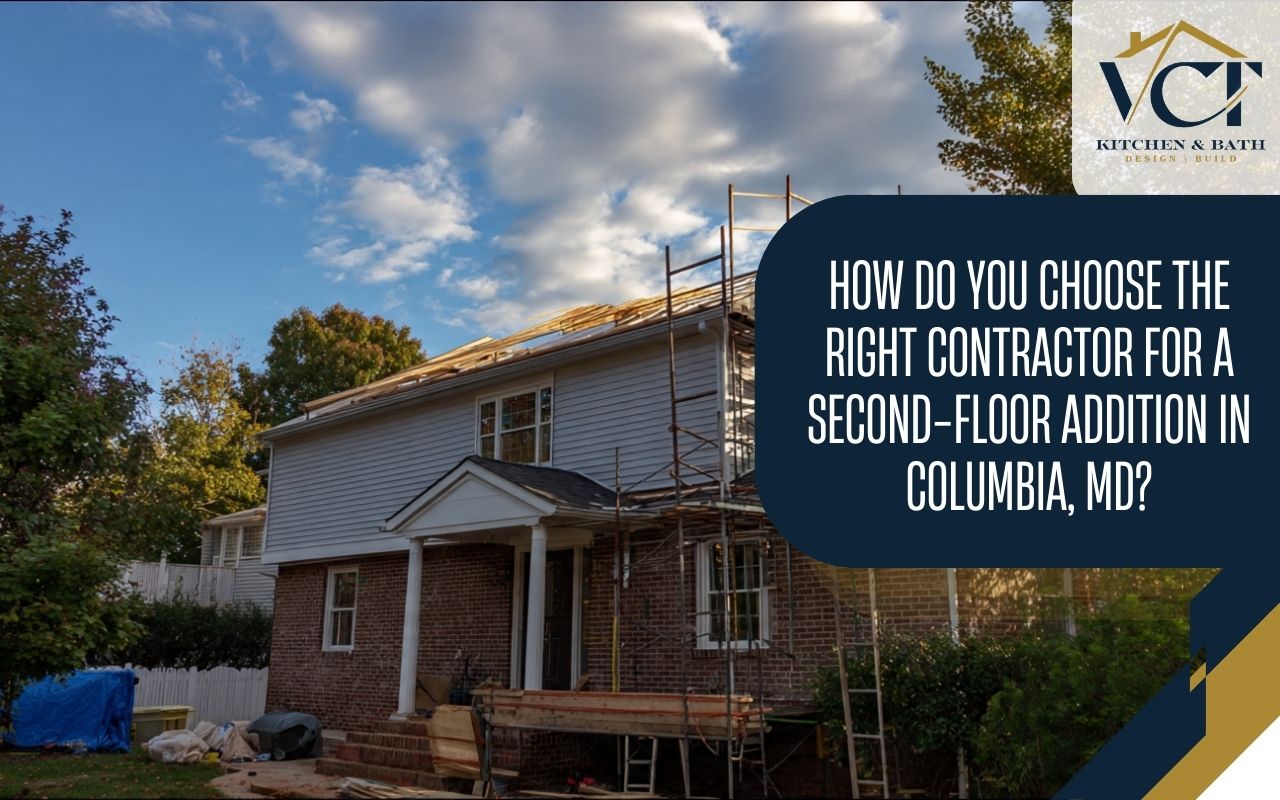
Adding a second level can transform how your property works in Columbia, Maryland. However, success depends on smart planning and the right team. From stair placement to roof tie-in details, each choice matters. VCT Kitchen And Bath helps owners reduce risk, protect value, and move through permits confidently.
How do you choose the right contractor for a second-floor addition in Columbia, MD?
First, choose a licensed, insured team with local inspection experience and clear communication. Next, confirm they coordinate structural engineering and plan a watertight roof tie-in. Then, review past work that shows safe stair placement and clean finishes. Finally, require a written scope that covers permits, schedules, and change orders. For a strong starting point, explore Home Addition Contractor in Columbia, MD from VCT Kitchen And Bath.
Why contractor selection matters for a second-floor build
A vertical addition affects the entire structure, so small mistakes become expensive quickly. Therefore, you should vet any Second story addition contractor in Columbia MD with extra care. Moreover, daily life changes during construction, so planning reduces stress. Also, the finished layout must feel natural, not forced.
- Because the load increases, framing and connections must be verified by structural engineering.
- Since stair placement affects flow, headroom, and safety, it needs early decisions.
- While the roof tie-in seems simple, flashing and slopes must prevent leaks.
- Finally, permits and inspections protect you from stop-work orders and rework.
What to verify before you sign a contract
First, confirm licensing and insurance in writing. Then, request a local portfolio that matches your building style. Also, ask how the team handles inspectors and documentation. If you want to see broader capabilities, review Remodeling Services, Flooring, Decks & Additions for an overview.
- Written scope that lists demolition, framing, and finish responsibilities.
- Clear plan for structural engineering reviews and stamped drawings.
- Defined approach for temporary weather protection during roof tie-in work.
- Schedule that includes inspection milestones and material lead times.
- Process for change orders, approvals, and site protection.
Because trust is earned visually, you should also browse recent work. For example, open the Project Portfolio to compare consistency and detail.
Design choices that shape comfort and code compliance
Good design reduces friction later, so discuss layout early. Meanwhile, confirm how stair placement will meet code clearances and feel natural. Additionally, plan mechanical routes before framing begins. For nearby-market perspective on additions, you can also read Home Addition Contractor in Gaithersburg MD.
- Stair placement that preserves privacy and avoids awkward room cuts.
- Roof tie-in geometry that matches drainage paths and existing slopes.
- Window alignment that keeps the exterior balanced and cohesive.
- Noise control strategies, especially over offices or bedrooms.
As you refine the plan, compare each option to your daily routines. Therefore, you avoid “beautiful but unusable” spaces. If you run a small office, this step matters even more.
Permits and inspections: what to expect
Permits protect safety, so start them early. Also, confirm which jurisdiction applies to your property. Even if your site is not in Montgomery County, the workflow is still instructive. For guidance, see Home Addition Permit Requirements in Montgomery County, MD.
- First, define scope and confirm zoning constraints and setbacks.
- Next, assemble plans, including structural engineering calculations.
- Then, submit permit applications and respond quickly to comments.
- After that, schedule inspections at framing and key rough-ins.
- Finally, complete the final walkthrough and close permits correctly.
Since timelines can shift, communication is essential. Therefore, insist on weekly updates and documented decisions.
How to choose your contractor step by step
Because you are making a major investment, use a repeatable selection process. Also, keep every promise in writing. When you are ready to plan a visit, VCT Kitchen And Bath can walk your site and explain realistic next steps.
- First, shortlist teams with proven local additions and clean safety records.
- Next, interview them about stair placement, roof tie-in methods, and staging.
- Then, request a written plan that includes structural engineering coordination.
- After that, review how they handle permits and scheduled inspections.
- Finally, choose the team that communicates clearly and documents everything.
As you evaluate options, keep your focus on outcomes. Therefore, you should hire based on process, not promises.
Frequently asked questions
When should I hire a structural engineer for a second-floor project?
Ideally, hire one before finalizing design, because loads and connections guide the layout. Also, a qualified Second story addition contractor in Columbia MD will coordinate the engineer’s inputs early. For service scope context, review Remodeling Services, Flooring, Decks & Additions.
What makes stair placement “right” in a second-story addition?
Good stair placement supports safe clearances, easy flow, and minimal disruption to main-floor rooms. Therefore, it should be planned with framing routes, not added later. For project planning guidance, start with Home Addition Contractor in Columbia, MD.
How do contractors prevent leaks at the roof tie-in?
A watertight roof tie-in depends on correct geometry, underlayment, and flashing continuity. Additionally, temporary weather protection matters during transitions. Since details vary, ask for a written roof tie-in sequence and inspection points. You can also ask process questions via the FAQ Hub.
Do I always need permits for a second story addition?
In most cases, yes, because structural work and life-safety systems are involved. Therefore, confirm permit requirements early and plan inspections into the schedule. For a permit process example, see Home Addition Permit Requirements in Montgomery County, MD.
How do I start the process with a local contractor in Columbia?
First, schedule a site visit and share your goals, timeline, and constraints. Then, request a written scope that includes structural engineering coordination and permit support. To begin, book directly through Book Appointment.
Next steps and trusted reading
If you want the safest path, start with a documented plan and a clear communication rhythm. Also, confirm who owns permits, inspections, and closeout paperwork. When you want a consultation, contact VCT Kitchen And Bath using Contact VCT Kitchen And Bath. Then, discuss how a Second story addition contractor in Columbia MD will handle stair placement and roof tie-in details.
For additional planning guidance, these editorial resources are helpful:
- How to Add Second Floor to Your House (This Old House)
- Everything You Should Know About Adding a Second Story to a House (Better Homes & Gardens)