
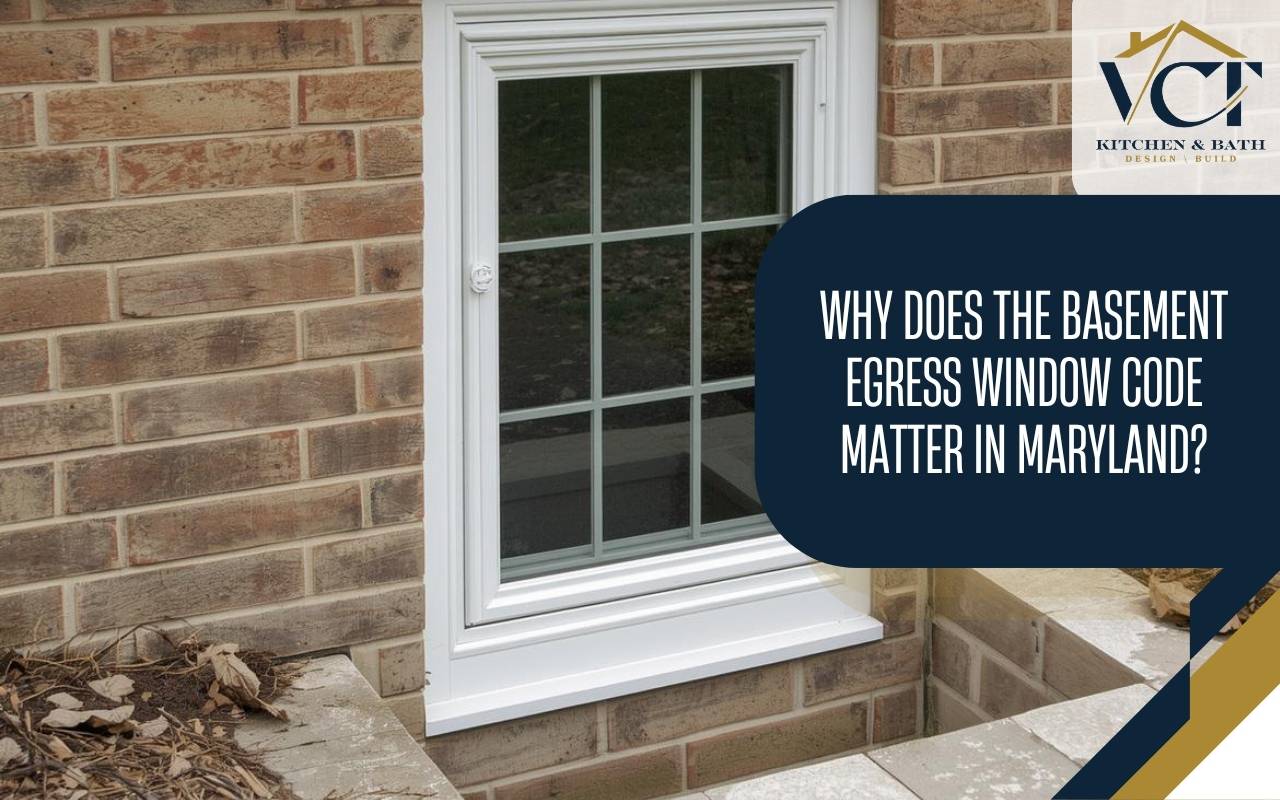
Planning a lower-level renovation in Maryland? Understanding the basement egress window code Maryland keeps your project safe, legal, and ready for inspections. This guide explains IRC specs, window wells, safety ladders, permits, and drainage so your basement bedroom, office, or media room passes review the first time and adds real value to your home for years of comfortable code-approved living.
Why does the basement egress window code matter in Maryland?
The basement egress window code Maryland ensures every finished lower level has a safe escape route and clear firefighter access. Meeting these rules protects your family, reduces liability, preserves resale value, and prevents expensive tear-outs during inspections or appraisals.
Key IRC specs for Maryland basements
Maryland building departments rely on IRC specs with local amendments, so sizing your egress window correctly is critical for plan approval and smooth inspections.
- Minimum net clear opening: typically 5.7 sq. ft. (5.0 sq. ft. at grade-level openings).
- Minimum clear opening height: 24 in; minimum width: 20 in.
- Maximum sill height: 44 in above the finished floor.
- Window wells: large enough for the sash to fully open and allow easy exit.
- Ladders required: when well depth exceeds 44 in from grade to well floor.
Always confirm dimensions with your local code office, as Maryland counties can refine IRC specs and add unique notes on wells, guards, or covers.
Designing compliant window wells and safety ladders
Window wells are part of your emergency path, not just a hole in the ground. Good design improves safety, drainage, and day-to-day usability.
- Clearance: provide at least 36 in from glass to well wall so the sash opens fully and adults can maneuver.
- Drainage: use gravel at the base and connect to a drain, daylight outlet, or sump to avoid standing water.
- Materials: consider corrugated steel, concrete, or reinforced composites that resist soil pressure and frost heave.
- Ladders: install durable, rust-resistant rungs securely anchored to the well; ensure they’re easy to grip, even in an emergency.
- Covers: select covers that keep debris and snow out but open easily from the inside without keys or tools.
Thoughtful placement, lighting, and safe ladder spacing make the escape route intuitive—even in the dark or during a fire.
Permits, process and inspections in Maryland
Permit reviewers look for basement egress window code Maryland details such as opening size, well dimensions, sill height, and ladder locations. Proper documentation keeps the process predictable.
- Plan review: submit scaled drawings with window sizes, well width and projection, sill height, and any structural changes.
- Pre-backfill inspection: inspectors check well size, drainage, waterproofing, and ladder installation before soil is backfilled.
- Final inspection: they verify operability, net clear opening, interior sill height, finishes, and clear access to the window.
Coordinate with your contractor so each inspection is scheduled before work is concealed, reducing surprises and costly rework.
Practical tips to pass inspection the first time
Many projects miss on small details, not major structural issues. A few careful checks before inspectors arrive can make all the difference.
- Measure the net clear opening (actual open space) rather than relying on the manufacturer’s nominal size.
- Keep the interior sill at or below 44 in; use a deeper well or different window style if you’re close to the limit.
- Position ladders so they are easy to reach but do not interfere with the sash swing or emergency exit path.
- Show drainage details and well materials clearly on your plans to avoid correction notices.
- Photograph framing, waterproofing, and drainage components before they’re covered to document compliance.
Value, light and livability in a finished basement
A properly sized egress window transforms a dark basement into usable, marketable living space. Natural light, ventilation, and legal bedroom status can significantly improve how the space feels and how buyers perceive it.
Because the egress opening is directly tied to life safety, appraisers and home inspectors often verify compliance. Documented approvals, permits, and passed inspections reassure future buyers that the work was done to current standards, not just “good intentions.”
Frequently Asked Questions
Do all finished basements need an egress window in Maryland?
If a basement includes habitable space—such as a bedroom, office, or family room—codes generally require at least one compliant emergency escape and rescue opening. Each dedicated bedroom usually needs its own opening. Confirm with your local building department before framing or closing walls.
Can a casement window satisfy code requirements?
Yes. Casement units often reach the required net clear opening more easily than sliders because most of the frame swings out of the way. Verify that the hardware allows the sash to open fully and that the well provides enough projection for the window to operate without obstruction.
When is a safety ladder required in a basement window well?
Most jurisdictions require a permanently attached ladder when the window well depth exceeds 44 in. Rungs must be evenly spaced, easy to grip, and project into the well without blocking the window opening. Check your county’s ladder spacing and width rules before ordering a prefabricated well system.
Do I need a permit to replace a small basement window with an egress unit?
In most Maryland jurisdictions, yes. Enlarging an opening, cutting concrete, installing a well, or altering structural supports all trigger permits and inspections. A licensed contractor or design-build firm can help you prepare drawings, pull permits, and coordinate inspections to keep the project compliant and on schedule.
How can I document compliance for resale or refinancing?
Keep copies of approved plans, permit cards, inspection sign-offs, and product data showing tested ratings and sizes. Store photos of the well excavation, drainage, and waterproofing. Sharing this package with buyers or appraisers demonstrates that the work followed current codes and reduces questions during negotiations.
How to plan a code-compliant basement egress window
- Contact your local building department to confirm current IRC adoption and any Maryland-specific amendments.
- Measure the existing basement space, grade, and wall thickness to determine feasible window types and locations.
- Size the opening using IRC specs, then confirm net clear dimensions from the manufacturer’s cut sheets.
- Design the window well, drainage, and ladder layout so nothing interferes with the escape path.
- Prepare scaled drawings and apply for permits before ordering materials or scheduling excavation.
- Work with experienced installers to cut the opening, install the unit, and coordinate required inspections.
- Document approvals, photos, and warranties for future resale, refinancing, or insurance questions.
Next steps and local support
If you’re unsure whether your plans meet basement egress window code Maryland, consider partnering with a remodeling team that understands local requirements. Explore the full range of design-build options on our Kitchen & Bath Services page, or Contact VCT Kitchen & Bath to schedule a consultation focused on layout, drainage, and code compliance.
References
- How to Install an Egress Window for Safety and Aesthetic – This Old House